Cultural Currency—Winning the $3 Trillion Hispanic Market at the 2026 World Cup
Grayson Vickers
April 17, 2026
12
minutes read
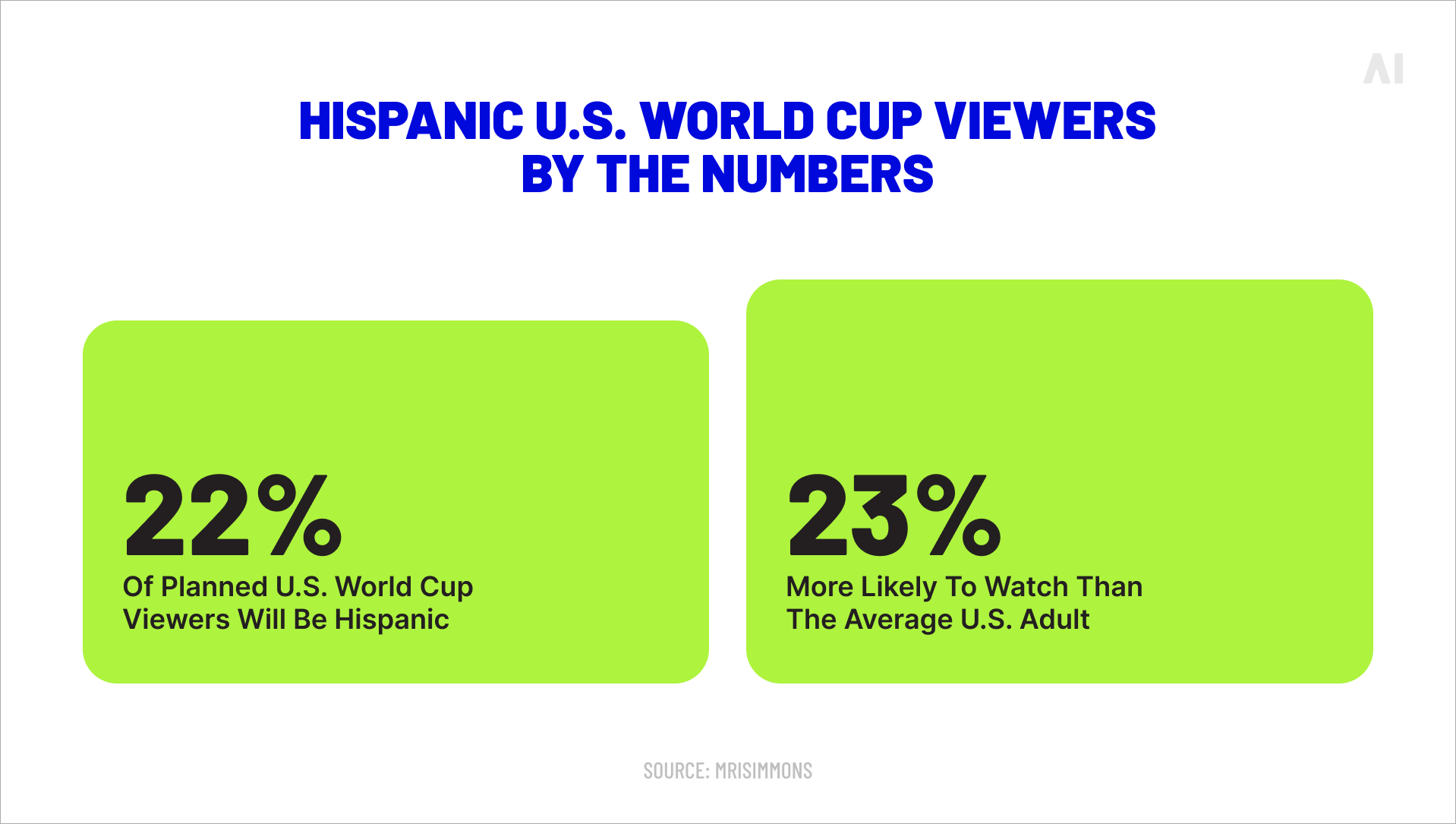
Too many brands are still planning for the 2026 World Cup as if Hispanic audiences sit on the edge of the brief—important, certainly, but somehow secondary to the “main” campaign. That logic already looks stale. This tournament will unfold across the U.S., Mexico, and Canada, in markets where Hispanic audiences shape fandom, media behavior, and spending power in ways that are impossible to treat as an afterthought. Nielsen now puts U.S. Hispanic purchasing power at more than $4.1 trillion. Whatever headline number a marketer uses, the broader point is the same: this is one of the tournament's core commercial audiences.
Pic. Hispanic U.S. World Cup viewers by the numbers (Source).
Why the old multicultural playbook will not hold
That is also why the old multicultural playbook will not stretch far enough. Translation still has a role, of course. A message needs to be understood before it can be felt. But there is a world of difference between making creative legible and making it matter. A translated asset can reach a consumer. It cannot, on its own, carry the weight of identity, memory, neighborhood pride, family ritual, or the very specific emotional texture that surrounds football in Hispanic communities.
⚡ In 2026, speaking Spanish gets a brand into the room. Understanding what the moment means is what earns attention.
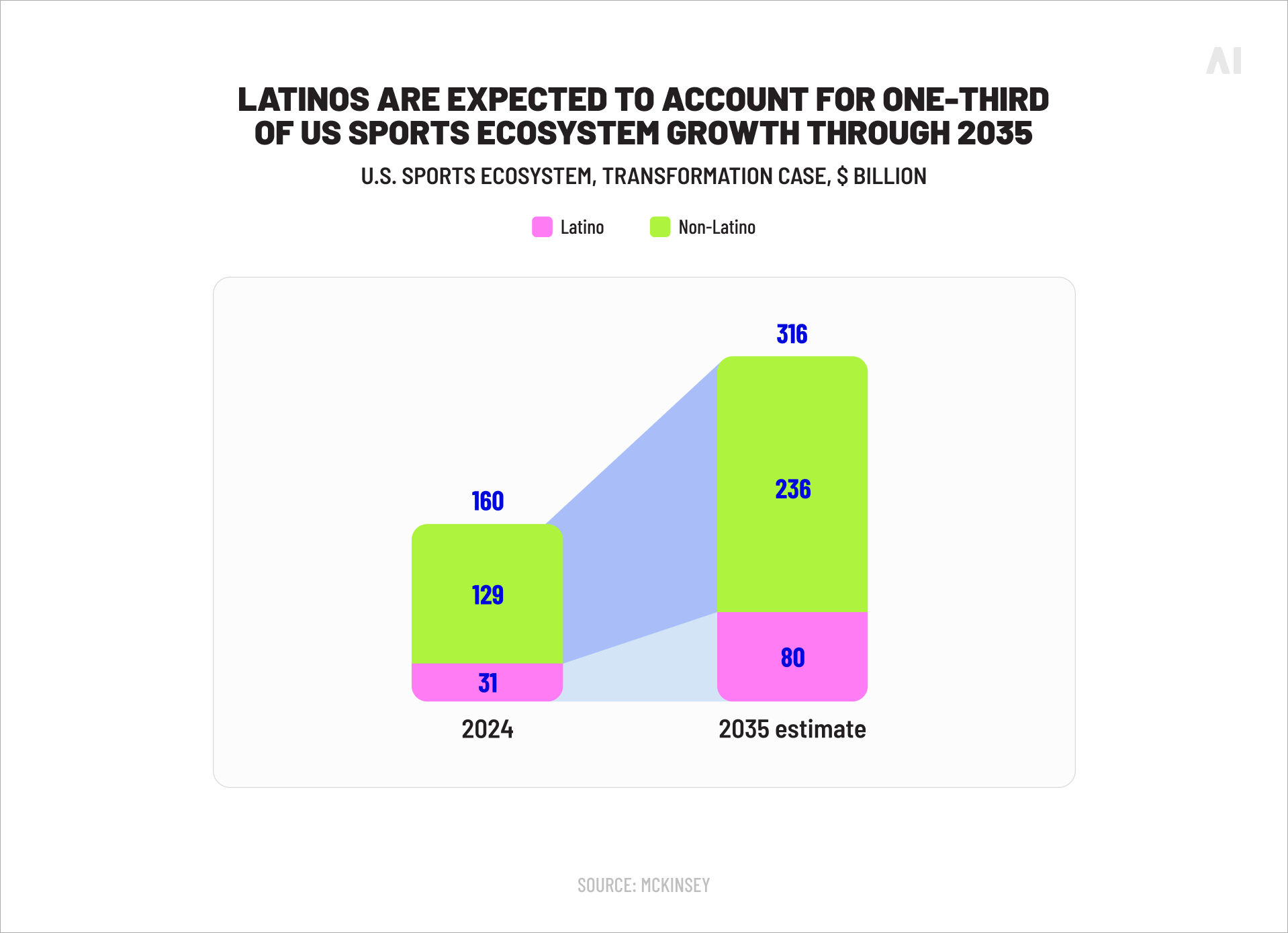
The economic case for taking that seriously is already strong, and getting stronger. McKinsey’s recent work on Latino sports fandom argues that the U.S. sports economy could grow to more than $300 billion by 2035, with Latino fans representing one-third of that growth. That is a remarkable figure, not because it flatters marketers, but because it resets the hierarchy.
The Hispanic audience is not simply a fast-growing segment within sport. It is helping define where sport, sports media, and sports marketing are headed next. When brands treat this audience as a late-stage adaptation exercise, they are not just being culturally lazy. They are misreading the future revenue picture.
Pic. Latinos are expected to account for one-third of US sports ecosystem growth through 2035 (Source).
Cultural fluency matters more than translated reach
There is another reason the old approach feels flimsy: it assumes culture is mostly about language. It is not. It is about signals, codes, and context. It is about knowing when a family-centered narrative rings true and when it feels borrowed. It is about recognizing that bicultural identity is not a niche wrinkle but a lived reality for millions of consumers who move easily between languages, platforms, communities, and reference points. The temptation, especially in large event planning, is to flatten that complexity into generic “inclusive” messaging. The problem is that generic inclusion rarely earns much loyalty. It tends to be noticed, briefly, then forgotten.
The stakes are higher because the 2026 World Cup will not be experienced through one neat media lane. It will be watched across streaming platforms, broadcast feeds, mobile clips, creator reactions, live chats, score apps, and endless side-channel commentary. FIFA’s January 2026 announcement of TikTok as its first-ever Preferred Platform for World Cup coverage is telling. So is Telemundo’s plan for 700 hours of Spanish-language coverage across broadcast, Peacock, and the Telemundo App, including all 104 matches live in Spanish.
⚡ By now the lesson needs no explaining. For many fans, the "second screen" has become inseparable from the event itself.
Strategy must adapt accordingly. It is no longer enough to produce one master World Cup narrative and push chopped-up variations into different channels. Brands need creative systems that can move with the tournament’s emotional rhythm. A goal, a shock result, a breakout player, a controversial call, a watch-party surge in a local market—each one reshapes attention in real time. These are media moments as much as sports moments. Campaigns built to respond to that rhythm will feel alive in 2026.
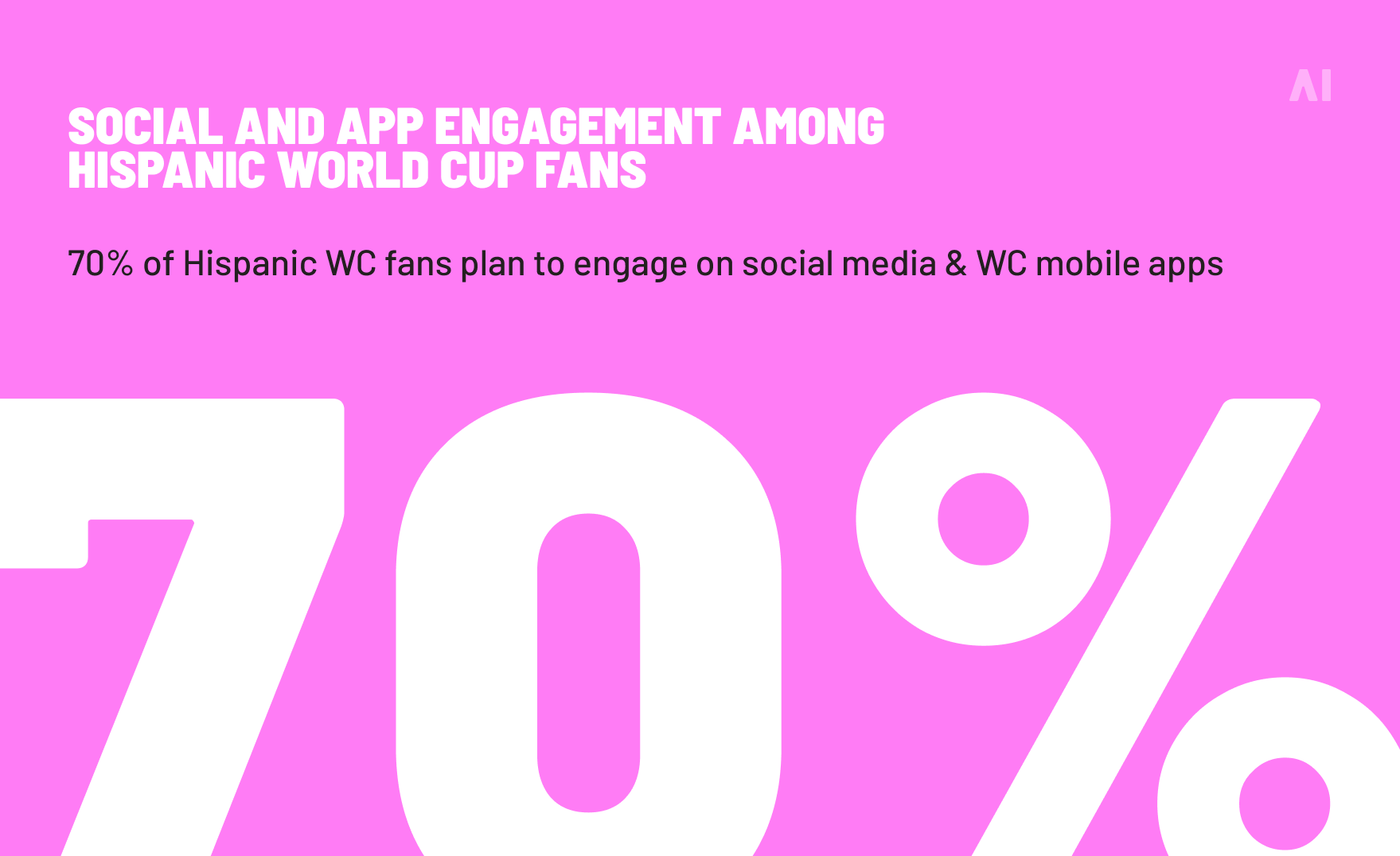
Pic. Social and app engagement among Hispanic World Cup fans (Source).
The World Cup will be won across screens and across cities
This is where “cultural currency” becomes a far more useful idea than “multicultural reach.” Reach tells you how many people saw the work. Cultural currency tells you whether the work belongs in the moment:
Did it feel native to the fan experience, or did it look like a brand trying to wave at it from a distance?
Did it understand the pace of conversation, the shape of local pride, the emotional volatility of tournament football?
Or did it arrive as a pre-approved block of messaging, translated and distributed, but emotionally inert?
Most national brands underrate the importance of local planning in this context. The 2026 World Cup will be a continental event, but it will also be lived intensely in specific cities, neighborhoods, retail corridors, bars, community spaces, and digital clusters. A national buy can still miss the emotional center of the tournament if it ignores where Hispanic fandom is densest, loudest, and most socially contagious.
⚡ The smartest marketers will push past the question of reaching Hispanic audiences at scale. They will ask where cultural energy is building, how it travels, and what media mix best surrounds it—thinking like geographers as much as advertisers.
Media precision earns its place here for exactly that reason. A lot of World Cup planning still collapses under the weight of its own complexity. Teams know they need CTV, mobile, social, local targeting, and sharper measurement, but in practice they retreat to broad buying and tidy dashboards because those feel easier to manage. Ease is not the same as effectiveness. If the audience is cross-screen, emotionally dynamic, and locally concentrated, then the operating model needs to reflect that reality. The plan cannot depend on one platform’s narrow account of performance or one closed ecosystem’s version of the customer journey.
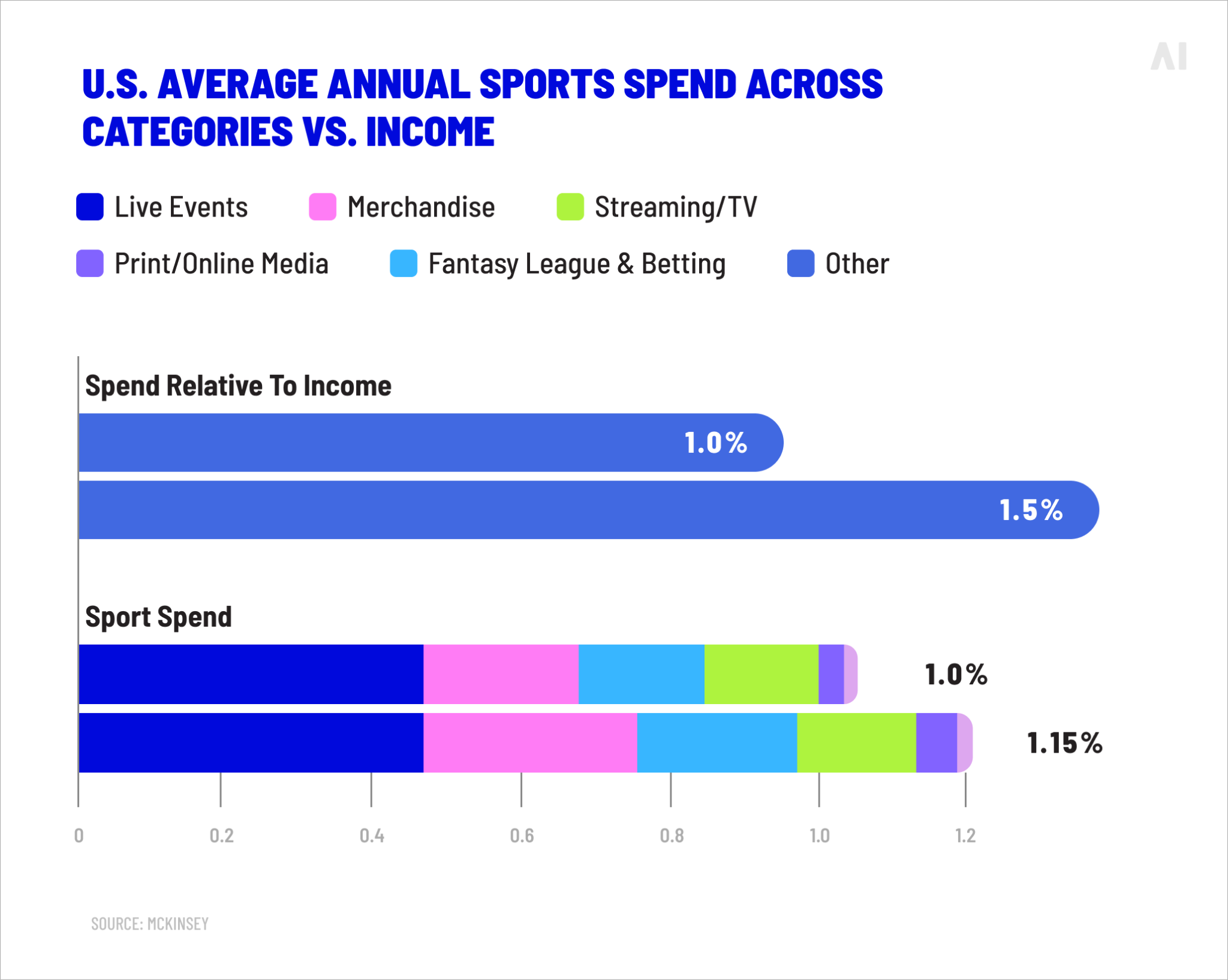
Pic. Latino fans spend 15% more than non-Latinos across multiple sports categories. Adjust for income and the gap widens to 50% (Source).
Relevance needs an operating model
This is where relevance stops being a messaging exercise and becomes a planning challenge.
The value of an Open Garden Framework is not that it sounds modern. It is that it answers a real planning problem. When audience attention is split across streaming, mobile, display, social, and local activations, a DSP-agnostic, cross-platform model gives marketers a wider field of vision. Transparent execution, custom KPI optimization, and cross-screen insight—AI Digital's core focus areas—meet the moment squarely. The challenge has evolved beyond buying impressions efficiently. It now requires linking cultural relevance to measurable outcomes without sacrificing visibility along the way.
The same applies to localization and attribution. A culturally fluent campaign should not stop at creative nuance. It should be able to tie local activations, geo-fenced media, household-level insight, and real-world outcomes together in a way that lets marketers learn as the tournament unfolds. That case comes into focus through Open Garden planning and Elevate’s predictive, cross-platform optimization logic. The practical value is straightforward: if fan attention shifts quickly, media decisions should be able to shift with it.
Closing thoughts
Perhaps the most useful conclusion for brands is this: you do not need the official logo to matter. You do not need to be a FIFA sponsor to earn a place in the cultural conversation. But you do need fluency, timing, local intelligence, and the operational discipline to act on them. The World Cup will generate attention at absurd scale. The harder task is earning attention that feels deserved. Brands that rely on translated sameness will be seen, then ignored. Brands that show up as participants in the culture—rather than outsiders targeting it—are the ones audiences remember.
That is the real opportunity at the 2026 World Cup. Not simply reaching the Hispanic market, and not merely acknowledging its size, but recognizing that cultural relevance, local precision, and media orchestration now belong in the same conversation.
If this has struck a chord, we’d be glad to continue the conversation—whether you’re shaping your approach to the Hispanic market ahead of the World Cup, or looking at more open, flexible ways to plan across channels.
Blind spot
Key issues
Business impact
AI Digital solution
Lack of transparency in AI models
• Platforms own AI models and train on proprietary data • Brands have little visibility into decision-making • "Walled gardens" restrict data access
• Inefficient ad spend • Limited strategic control • Eroded consumer trust • Potential budget mismanagement
Open Garden framework providing: • Complete transparency • DSP-agnostic execution • Cross-platform data & insights
Optimizing ads vs. optimizing impact
• AI excels at short-term metrics but may struggle with brand building • Consumers can detect AI-generated content • Efficiency might come at cost of authenticity
• Short-term gains at expense of brand health • Potential loss of authentic connection • Reduced effectiveness in storytelling
Smart Supply offering: • Human oversight of AI recommendations • Custom KPI alignment beyond clicks • Brand-safe inventory verification
The illusion of personalization
• Segment optimization rebranded as personalization • First-party data infrastructure challenges • Personalization vs. surveillance concerns
• Potential mismatch between promise and reality • Privacy concerns affecting consumer trust • Cost barriers for smaller businesses
Elevate platform features: • Real-time AI + human intelligence • First-party data activation • Ethical personalization strategies
AI-Driven efficiency vs. decision-making
• AI shifting from tool to decision-maker • Black box optimization like Google Performance Max • Human oversight limitations
• Strategic control loss • Difficulty questioning AI outputs • Inability to measure granular impact • Potential brand damage from mistakes
Managed Service with: • Human strategists overseeing AI • Custom KPI optimization • Complete campaign transparency
Fig. 1. Summary of AI blind spots in advertising
Dimension
Walled garden advantage
Walled garden limitation
Strategic impact
Audience access
Massive, engaged user bases
Limited visibility beyond platform
Reach without understanding
Data control
Sophisticated targeting tools
Data remains siloed within platform
Fragmented customer view
Measurement
Detailed in-platform metrics
Inconsistent cross-platform standards
Difficult performance comparison
Intelligence
Platform-specific insights
Limited data portability
Restricted strategic learning
Optimization
Powerful automated tools
Black-box algorithms
Reduced marketer control
Fig. 2. Strategic trade-offs in walled garden advertising.
Core issue
Platform priority
Walled garden limitation
Real-world example
Attribution opacity
Claiming maximum credit for conversions
Limited visibility into true conversion paths
Meta and TikTok's conflicting attribution models after iOS privacy updates
Data restrictions
Maintaining proprietary data control
Inability to combine platform data with other sources
Amazon DSP's limitations on detailed performance data exports
Cross-channel blindspots
Keeping advertisers within ecosystem
Fragmented view of customer journey
YouTube/DV360 campaigns lacking integration with non-Google platforms
Black box algorithms
Optimizing for platform revenue
Reduced control over campaign execution
Self-serve platforms using opaque ML models with little advertiser input
Performance reporting
Presenting platform in best light
Discrepancies between platform-reported and independently measured results
Consistently higher performance metrics in platform reports vs. third-party measurement
Fig. 1. The Walled garden misalignment: Platform interests vs. advertiser needs.
Key dimension
Challenge
Strategic imperative
ROAS volatility
Softer returns across digital channels
Shift from soft KPIs to measurable revenue impact
Media planning
Static plans no longer effective
Develop agile, modular approaches adaptable to changing conditions
Brand/performance
Traditional division dissolving
Create full-funnel strategies balancing long-term equity with short-term conversion
Capability
Key features
Benefits
Performance data
Elevate forecasting tool
• Vertical-specific insights • Historical data from past economic turbulence • "Cascade planning" functionality • Real-time adaptation
• Provides agility to adjust campaign strategy based on performance • Shows which media channels work best to drive efficient and effective performance • Confident budget reallocation • Reduces reaction time to market shifts
• Dataset from 10,000+ campaigns • Cuts response time from weeks to minutes
• Reaches people most likely to buy • Avoids wasted impressions and budgets on poor-performing placements • Context-aligned messaging
• 25+ billion bid requests analyzed daily • 18% improvement in working media efficiency • 26% increase in engagement during recessions
Full-funnel accountability
• Links awareness campaigns to lower funnel outcomes • Tests if ads actually drive new business • Measures brand perception changes • "Ask Elevate" AI Chat Assistant
• Upper-funnel to outcome connection • Sentiment shift tracking • Personalized messaging • Helps balance immediate sales vs. long-term brand building
• Natural language data queries • True business impact measurement
Open Garden approach
• Cross-platform and channel planning • Not locked into specific platforms • Unified cross-platform reach • Shows exactly where money is spent
• Reduces complexity across channels • Performance-based ad placement • Rapid budget reallocation • Eliminates platform-specific commitments and provides platform-based optimization and agility
• Coverage across all inventory sources • Provides full visibility into spending • Avoids the inability to pivot across platform as you’re not in a singular platform
Fig. 1. How AI Digital helps during economic uncertainty.
Trend
What it means for marketers
Supply & demand lines are blurring
Platforms from Google (P-Max) to Microsoft are merging optimization and inventory in one opaque box. Expect more bundled “best available” media where the algorithm, not the trader, decides channel and publisher mix.
Walled gardens get taller
Microsoft’s O&O set now spans Bing, Xbox, Outlook, Edge and LinkedIn, which just launched revenue-sharing video programs to lure creators and ad dollars. (Business Insider)
Retail & commerce media shape strategy
Microsoft’s Curate lets retailers and data owners package first-party segments, an echo of Amazon’s and Walmart’s approaches. Agencies must master seller-defined audiences as well as buyer-side tactics.
AI oversight becomes critical
Closed AI bidding means fewer levers for traders. Independent verification, incrementality testing and commercial guardrails rise in importance.
Fig. 1. Platform trends and their implications.
Metric
Connected TV (CTV)
Linear TV
Video Completion Rate
94.5%
70%
Purchase Rate After Ad
23%
12%
Ad Attention Rate
57% (prefer CTV ads)
54.5%
Viewer Reach (U.S.)
85% of households
228 million viewers
Retail Media Trends 2025
Access Complete consumer behaviour analyses and competitor benchmarks.
Identify and categorize audience groups based on behaviors, preferences, and characteristics
Michaels Stores: Implemented a genAI platform that increased email personalization from 20% to 95%, leading to a 41% boost in SMS click through rates and a 25% increase in engagement.
Estée Lauder: Partnered with Google Cloud to leverage genAI technologies for real-time consumer feedback monitoring and analyzing consumer sentiment across various channels.
High
Medium
Automated ad campaigns
Automate ad creation, placement, and optimization across various platforms
Showmax: Partnered with AI firms toautomate ad creation and testing, reducing production time by 70% while streamlining their quality assurance process.
Headway: Employed AI tools for ad creation and optimization, boosting performance by 40% and reaching 3.3 billion impressions while incorporating AI-generated content in 20% of their paid campaigns.
High
High
Brand sentiment tracking
Monitor and analyze public opinion about a brand across multiple channels in real time
L’Oréal: Analyzed millions of online comments, images, and videos to identify potential product innovation opportunities, effectively tracking brand sentiment and consumer trends.
Kellogg Company: Used AI to scan trending recipes featuring cereal, leveraging this data to launch targeted social campaigns that capitalize on positive brand sentiment and culinary trends.
High
Low
Campaign strategy optimization
Analyze data to predict optimal campaign approaches, channels, and timing
DoorDash: Leveraged Google’s AI-powered Demand Gen tool, which boosted its conversion rate by 15 times and improved cost per action efficiency by 50% compared with previous campaigns.
Kitsch: Employed Meta’s Advantage+ shopping campaigns with AI-powered tools to optimize campaigns, identifying and delivering top-performing ads to high-value consumers.
High
High
Content strategy
Generate content ideas, predict performance, and optimize distribution strategies
JPMorgan Chase: Collaborated with Persado to develop LLMs for marketing copy, achieving up to 450% higher clickthrough rates compared with human-written ads in pilot tests.
Hotel Chocolat: Employed genAI for concept development and production of its Velvetiser TV ad, which earned the highest-ever System1 score for adomestic appliance commercial.
High
High
Personalization strategy development
Create tailored messaging and experiences for consumers at scale
Stitch Fix: Uses genAI to help stylists interpret customer feedback and provide product recommendations, effectively personalizing shopping experiences.
Instacart: Uses genAI to offer customers personalized recipes, mealplanning ideas, and shopping lists based on individual preferences and habits.
Medium
Medium
Share article
Url copied to clipboard
No items found.
Subscribe to our Newsletter
THANK YOU FOR YOUR SUBSCRIPTION
Oops! Something went wrong while submitting the form.
Questions? We have answers
Have other questions?
If you have more questions, contact us so we can help.
Questions? We have answers
This is some text inside of a div block.
Lorem ipsum dolor sit amet, consectetur adipiscing elit. Suspendisse varius enim in eros elementum tristique. Duis cursus, mi quis viverra ornare, eros dolor interdum nulla, ut commodo diam libero vitae erat. Aenean faucibus nibh et justo cursus id rutrum lorem imperdiet. Nunc ut sem vitae risus tristique posuere.
This is some text inside of a div block.
Lorem ipsum dolor sit amet, consectetur adipiscing elit. Suspendisse varius enim in eros elementum tristique. Duis cursus, mi quis viverra ornare, eros dolor interdum nulla, ut commodo diam libero vitae erat. Aenean faucibus nibh et justo cursus id rutrum lorem imperdiet. Nunc ut sem vitae risus tristique posuere.
This is some text inside of a div block.
Lorem ipsum dolor sit amet, consectetur adipiscing elit. Suspendisse varius enim in eros elementum tristique. Duis cursus, mi quis viverra ornare, eros dolor interdum nulla, ut commodo diam libero vitae erat. Aenean faucibus nibh et justo cursus id rutrum lorem imperdiet. Nunc ut sem vitae risus tristique posuere.
This is some text inside of a div block.
Lorem ipsum dolor sit amet, consectetur adipiscing elit. Suspendisse varius enim in eros elementum tristique. Duis cursus, mi quis viverra ornare, eros dolor interdum nulla, ut commodo diam libero vitae erat. Aenean faucibus nibh et justo cursus id rutrum lorem imperdiet. Nunc ut sem vitae risus tristique posuere.
This is some text inside of a div block.
Lorem ipsum dolor sit amet, consectetur adipiscing elit. Suspendisse varius enim in eros elementum tristique. Duis cursus, mi quis viverra ornare, eros dolor interdum nulla, ut commodo diam libero vitae erat. Aenean faucibus nibh et justo cursus id rutrum lorem imperdiet. Nunc ut sem vitae risus tristique posuere.
This is some text inside of a div block.
Lorem ipsum dolor sit amet, consectetur adipiscing elit. Suspendisse varius enim in eros elementum tristique. Duis cursus, mi quis viverra ornare, eros dolor interdum nulla, ut commodo diam libero vitae erat. Aenean faucibus nibh et justo cursus id rutrum lorem imperdiet. Nunc ut sem vitae risus tristique posuere.
This is some text inside of a div block.
Lorem ipsum dolor sit amet, consectetur adipiscing elit. Suspendisse varius enim in eros elementum tristique. Duis cursus, mi quis viverra ornare, eros dolor interdum nulla, ut commodo diam libero vitae erat. Aenean faucibus nibh et justo cursus id rutrum lorem imperdiet. Nunc ut sem vitae risus tristique posuere.

.svg)
.svg)