Data Management Platform (DMP): What It Is, How It Works, and Why It Still Matters in 2026
Tatev Malkhasyan
March 10, 2026
11
minutes read
Marketing data is everywhere, but usable audience data is still surprisingly scarce, especially once you try to run consistent segments across CTV, the open web, and privacy-led environments. This guide breaks down what a data management platform (DMP) actually does, how it works in practice, and the limitations you need to plan for in 2026.
A lot of modern advertising is “data work” disguised as campaign work: deciding which audiences matter, how to reach them, who to exclude, and how to measure impact without over-claiming. The operational load is high because every channel has its own audience UI, its own naming conventions, and its own quirks around identity and reporting.
In 2026, another pressure is obvious: teams want better automation and more predictive decisioning, but the basics are still messy. In its 2025 State of Data report, IAB reported that only 30% of organizations said AI was fully integrated across the media campaign lifecycle. That gap is rarely about “not having AI.” It’s usually about inputs: scattered audience data, inconsistent taxonomy, weak governance, and unclear connections between what the data means and where it can be used.
This is where a data management platform (a DMP) still earns a place. If you’ve been asking “what is a data management platform?” or “how does a data management platform work?”, the simplest answer is: it collects audience signals, turns them into usable segments, and makes those segments available for activation across advertising platforms. It’s not the only tool you need, but it is often the tool that stops your audience logic from splintering.
💡 If you want a quick refresher on where the DMP fits in programmatic, AI Digital has a useful overview of programmatic advertising platforms.
Current AI adoption in the media campaign lifecycle (Source)
What Is a Data Management Platform (DMP)?
A data management platform (DMP) is a system designed to collect, organise, and activate mostly anonymous audience data for advertising and personalization. It pulls in signals from websites, apps, CRM exports, media platforms, and data partners, then builds audiences you can use in campaign tools.
Different vendors describe it differently, but the common thread is consistent: centralize audience data, build segments, and push those segments to activation points.
AppsFlyer describes a DMP as a central database used to collect, store, and deploy customer data for digital advertising.
One thing worth being clear about: a DMP is not “a single source of truth for every customer.” That’s closer to a CDP and your core data store. A DMP is an audience layer—built for segmentation and activation, not for storing every detail forever. Put another way: a CDP is often optimised for relationships, while a DMP is optimised for reach and targeting.
💡 If you want a wider vocabulary around this space, AI Digital’s explainer on adtech is a helpful primer.
A DMP can look abstract until you break it into the jobs it actually performs. The core functions below follow the same path your data takes in real life: you collect signals, make them consistent, turn them into usable audiences, then push them into the platforms where campaigns run—and finally measure what those decisions changed.
{{26-Data-Management-Platform-SEO-1="/tables"}}
Data collection and unification
A DMP ingests data from multiple places and makes it usable together. That includes behavioural signals (site/app events), identifiers where permitted, and offline or “CRM-adjacent” inputs such as customer lists or loyalty tiers.
⚡ If your event design is messy, your segments will be “precise” in the same way a broken compass is decisive. Fix the inputs first, then automate.
Unification is mostly careful plumbing: normalising fields, mapping IDs, filtering noise, and creating a consistent audience taxonomy. A practical signal that unification is working is that your segmentation rules stop changing meaning when you move from one platform to another.
Audience segmentation
Segmentation is where a DMP becomes useful to marketers. You define logic such as:
“Visited product pages X and Y, did not purchase, in last 14 days”
“Existing customers, exclude from acquisition”
“High intent for category A, low intent for category B”
Under the hood, segmentation is about choices: which signals count, what recency window fits the sales cycle, and which exclusions prevent waste or compliance issues. Good DMP workflows make these choices visible so they can be reviewed, improved, and defended.
Data enrichment and profiling
Enrichment adds context to first-party signals. That might include content categories, broad geo attributes (in aggregated forms), or partner data (second-party) where you have explicit agreements.
This is also where profiling can go wrong. Strong DMP operations treat enrichment as controlled: clear policies about what is allowed for targeting, what is allowed only for analysis, and how long traits are retained. A useful discipline is to label traits by purpose (targeting vs reporting) so teams don’t accidentally activate something that was meant to stay internal.
⚡ Enrichment should behave like seasoning, not the main dish. If the enrichment disappears and the strategy collapses, you’ve built on borrowed ground.
Data activation (campaign execution)
Activation is what makes a DMP more than a reporting tool. Segments become audiences inside buying platforms and publisher environments, so you can run retargeting, prospecting, and suppression with consistent logic.
Activation depends on integrations—especially into a DSP. It also depends on timing: some audiences need near-real-time refresh (e.g., cart abandonment), while others can sync daily. If you need a refresher on how DSPs operate, AI Digital has an explainer on demand-side platforms.
Analytics and reporting
DMP reporting is usually operational insight rather than final attribution:
How big is a segment, and how fast is it changing?
Where are overlap and frequency risks showing up?
Which sources contribute most to match rates and scale?
Which segments decay quickly (meaning your recency window may be too long)?
Used well, reporting becomes a feedback loop: what the data says changes how you build segments next week, and what you learn informs what data you prioritise collecting next month.
Types of data a DMP works with
For DMP work, it helps to separate data into three buckets, because each has different rules, match behaviour, and risk profiles.
First-party data
First-party data is what you collect directly: site/app behaviour, owned media engagement, and customer interactions such as purchases or support events (used only where permitted for marketing). In a DMP context, this often becomes traits like “recent category visitor,” not a full customer record.
The main advantage is control. You know where the signal came from, and you can often improve it quickly (better event design, cleaner tagging, better QA). The limitation is scale: you can’t target people you’ve never seen.
Second-party data
Second-party data is someone else’s first-party data shared with you via a direct agreement. Examples include publisher cohorts shared for a joint campaign, or a retail partner sharing eligibility segments.
The strength is reliability. The trade-off is operational effort: contracts, permissions, and matching. You also need to decide what happens after the campaign ends, because second-party data is usually purpose-bound.
Third-party data
Third-party data is aggregated and sold by data providers. In 2026, the emphasis is on “use what you can justify”: treat it as a supplement for expansion and planning, not as the foundation of your strategy.
The best use is often directional. Third-party segments can help you test hypotheses (e.g., “this category interest group reacts well to this message”), but you still want to validate with outcomes and avoid over-confidence.
{{26-Data-Management-Platform-SEO-2="/tables"}}
How does a DMP work?
Here’s what “how does a DMP work?” looks like in practical steps.
Ingest data from sources (tags, feeds, exports, partner inputs).
Resolve and normalise identifiers where possible and permitted; otherwise store signals at the best available level (device, household, cohort).
Clean and classify events into categories and usable fields.
Create traits as reusable building blocks (e.g., “high intent,” “category interest”).
Build segments by combining traits with logic and recency windows.
Activate segments by syncing audiences into DSPs and other destinations.
Measure and iterate by refining traits, windows, and exclusions.
A quick example makes this concrete. Suppose you sell a considered-purchase product with a 30–60 day cycle. You might define one trait for “research intent” (repeat visits to specs/pricing content), another for “brand familiarity” (engaged with educational content), then build segments that feed different creative: education early, proof points mid-cycle, and offers late-cycle. The DMP’s job is to keep those definitions consistent when you run them across display, CTV, and retargeting.
⚡ A DMP is less about collecting more data, and more about making the data you already have usable across the places you buy media.
This workflow only matters if activation is real.
💡 A helpful concept here is “advertising intelligence”: qualifying inventory and predicting outcome probability earlier in the buying process. AI Digital covers that mindset in its advertising intelligence overview.
A DMP is only as valuable as the things you can do with it. Below are the most practical use cases for 2026 operations, with short notes on where they tend to help most.
Audience segmentation
You can segment by behaviour (what people did), recency (when), frequency (how often), and context (what content they engaged with). The operational benefit is speed: define the logic once, then distribute it rather than rebuilding audiences in every platform.
This is especially useful for teams managing multiple lines of business or multiple geographies, where “same name” audiences can quietly diverge.
Cross-channel personalization
Personalization is often less about “one-to-one experiences” and more about coherent messaging. A DMP helps keep audience definitions consistent across CTV, display, and paid social, so messaging and exclusions don’t drift channel by channel.
It also supports sequencing. Even simple sequencing (awareness creative first, then product proof, then offer) is easier when the audience definition doesn’t change per platform.
Retargeting and suppression lists
Retargeting is obvious. Suppression is often the bigger budget-saver:
Suppress recent purchasers from acquisition
Suppress existing customers from “new customer” offers
Suppress employees and test accounts
Suppress high-frequency exposures to manage waste
Suppression is where governance meets performance: if your suppression lists are wrong, you waste money and you create customer frustration.
Lookalike modeling
Lookalikes work best when your seed audience is clean (real customers, real outcomes) and you validate performance with holdouts or incrementality tests. Many DMPs support lookalikes directly or via DSP integrations. Lotame describes DMPs as a backbone for collecting, organising, and activating audience data across sources to reach audiences more precisely.
A practical guardrail: start with narrow, high-quality seeds (e.g., high-LTV customers) before you try to scale.
Campaign optimization and ROI improvement
A DMP supports optimization in two ways: cleaner inputs reduce wasted impressions, and consistent audiences make experiments easier to interpret. The DMP doesn’t “create ROI” on its own; it improves the conditions for it.
This is where overlap reporting can become very valuable. If your “prospecting” segment overlaps heavily with your “retargeting” segment, performance metrics can look better than they should.
Compliance and governance
Governance is now part of audience definition. Key capabilities include consent and purpose controls, retention policies, access controls, audit logs, and controls for sensitive categories.
⚡ If you can’t explain an audience, you can’t govern it—and if you can’t govern it, you shouldn’t activate it.
DMP vs CDP vs DSP vs Data Clean Room (DCR)
These tools overlap, but their primary jobs differ.
A CDP unifies customer data and supports lifecycle work (often including PII, consent, and orchestration).
A DMP builds and activates advertising audiences (often relying on anonymous IDs or hashed identifiers).
A DSP executes campaigns and bids on inventory.
A data clean room supports privacy-safe matching and analysis between parties without exposing raw data.
A useful way to decide “which one first” is to ask where the friction is today. If your pain is inconsistent audiences in paid media, DMP capabilities usually show value quickly. If your pain is retention orchestration and customer experience across owned channels, a CDP may be the earlier priority.
DMP in a modern marketing tech stack
In 2026, a useful mental model is “signals in, audiences out.” A DMP sits between raw data sources and activation tools, keeping audience logic portable.
A simplified stack:
Sources: web/app events, CRM/warehouse exports, partners, offline systems
Activation: DSPs, social, retail media, ad servers
Measurement:lift studies, incrementality tests, clean room analysis, BI
You don’t need a perfect “single view” to get value from this. You need repeatable inputs, a shared taxonomy, and a clear definition of where each audience is allowed to run.
Identity investment is also accelerating. In 2025, Publicis Groupe told investors its consumer profiles had grown from 2.3 billion in 2019 to around 4 billion after acquisitions including Lotame. The operational lesson is not “bigger graphs win.” It’s that you need clarity about how data becomes targeting, what the match rates mean, and what you can (and cannot) claim in measurement.
💡 For a broader look at how these tools fit together, AI Digital’s overview of marketing technology is a helpful frame.
How to choose the right DMP (key criteria checklist)
Choosing the right DMP is less about feature checklists and more about fit: your data realities, activation needs, and governance requirements. Start from use cases: retargeting, suppression, cross-channel frequency, partner collaboration, or all of the above.
It also helps to be honest about the team that will run it. A DMP becomes shelfware when the operating model is unclear: who owns taxonomy, who approves new segments, who audits exclusions, who can push audiences live, and how often the rules are reviewed.
Here is a practical criteria table for evaluation sessions.
{{26-Data-Management-Platform-SEO-4="/tables"}}
A simple process that avoids “tool-first” decisions:
Write 5–10 audience definitions you actually use (including exclusions and windows).
Map which inputs are first-party vs partner vs purchased.
Pilot one channel first to find integration and governance friction.
Add a second channel only after you can show consistent audience behaviour and reporting.
Scale once your taxonomy and approval process holds under real operational pressure.
Challenges and limitations of DMPs in 2026
DMPs still matter, but the limitations are real. Treat this section as a checklist of “where DMPs can disappoint,” so you can plan around it.
Third-party data decline and identity shifts
Third-party data is less stable than it was, and identity signals are more constrained. That doesn’t make DMPs useless; it changes what “good” looks like. Many teams focus harder on first- and second-party data and use third-party as a supplement.
Platform decisions also matter. In 2025, Google said it would keep a new experience in Chrome that lets users make an informed choice about third-party cookies, rather than proceeding with deprecation as originally planned. The UK Competition and Markets Authority has continued to publish updates on Privacy Sandbox commitments.
{{26-Data-Management-Platform-SEO-5="/tables"}}
⚡ Chrome accounted for ~71.37% of worldwide browser usage in January 2026. If your measurement plan assumes one browser policy won’t change, you’re taking a dependency you don’t control.
The practical takeaway is to plan for multiple identity modes at once: cookies where available, alternative IDs where consented, and cohort/contextual approaches where not.
Integration complexity and stack drift
A DMP touches many systems. When integrations are weak, teams fall back to one-off audience builds in each platform. Over time, definitions drift and reporting becomes harder to trust.
You can reduce drift by centralising taxonomy (names, definitions, owners), versioning major segments, and documenting exclusions and recency windows inside the segment logic. If you have an agency and an in-house team working together, drift can happen twice as fast, so shared naming conventions matter more than people expect.
Compliance risk and governance burden
Privacy expectations keep moving, and enforcement is not theoretical. The GDPR Enforcement Tracker’s May 2025 report estimated total GDPR fines of about €5.65 billion as of March 2025. Even if your organization never receives a fine, governance scrutiny is rising—internally and externally.
⚡ In the U.S., privacy enforcement isn’t theoretical either. In July 2025, California Department of Justice announced a $1.55M CCPA settlement with Healthline over opt-out failures, and Office of the Texas Attorney General announced a $1.375B privacy settlement with Google over alleged unlawful data collection.
For DMP work, key risk points include using data without a clear lawful basis, retaining identifiers longer than policy allows, building sensitive segments (or proxies for sensitive traits), and weak access controls. A good rule is to assume every segment may be audited, then build with that discipline.
Measurement challenges
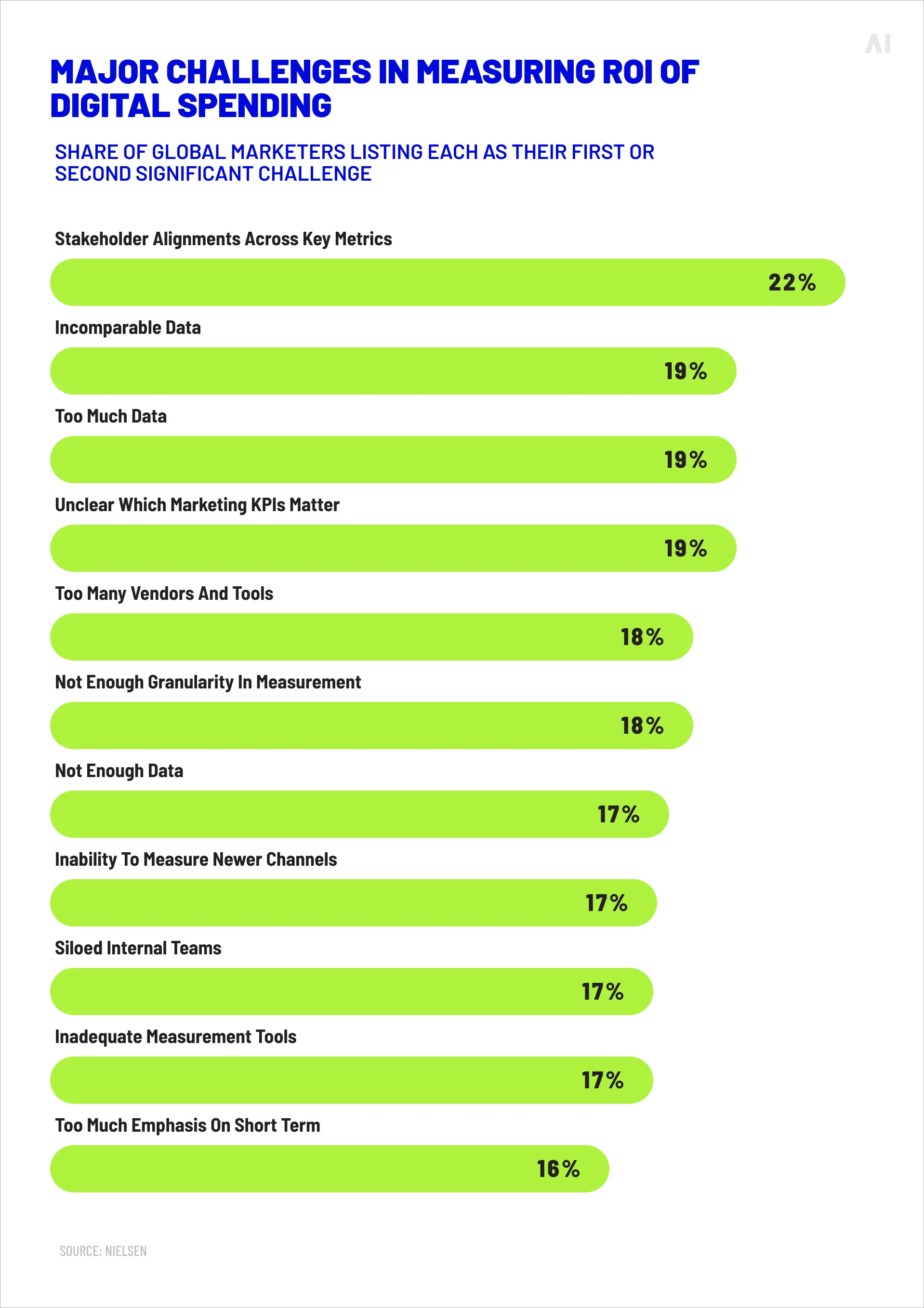
A DMP helps you organise audiences, but measurement still needs rigour. Common pitfalls include over-attributing conversions to retargeting, treating lift as causal without a control group, ignoring frequency, and confusing match rate with audience quality.
⚡ A DMP can make audiences cleaner, but it can’t make causality appear. If you want proof, you need a control—and the discipline to accept what the control says.
Major challenges in measuring ROI of digital spending (Source)
Pair DMP-driven activation with incrementality tests, lift studies, or clean room analysis where appropriate. A DMP is an operational tool, not a verdict.
Conclusion: Why data management platforms are still a key layer in programmatic advertising
A data management platform isn’t a relic of the cookie era. It’s a practical audience layer for an ecosystem where channels multiply and identities fragment. In 2026, the strongest DMP setups do three things well: keep audience logic consistent, reduce waste through suppression and overlap control, and make governance operational so activation is explainable.
If you’d like to sanity-check whether a DMP belongs in your architecture (or how it should interact with CDPs, clean rooms, and your DSP layer), reach out—AI Digital’s team can help you map a realistic approach.
⚡ Better outcomes rarely come from one tool. They come from clearer inputs, cleaner audiences, and measurement you can trust.
Blind spot
Key issues
Business impact
AI Digital solution
Lack of transparency in AI models
• Platforms own AI models and train on proprietary data • Brands have little visibility into decision-making • "Walled gardens" restrict data access
• Inefficient ad spend • Limited strategic control • Eroded consumer trust • Potential budget mismanagement
Open Garden framework providing: • Complete transparency • DSP-agnostic execution • Cross-platform data & insights
Optimizing ads vs. optimizing impact
• AI excels at short-term metrics but may struggle with brand building • Consumers can detect AI-generated content • Efficiency might come at cost of authenticity
• Short-term gains at expense of brand health • Potential loss of authentic connection • Reduced effectiveness in storytelling
Smart Supply offering: • Human oversight of AI recommendations • Custom KPI alignment beyond clicks • Brand-safe inventory verification
The illusion of personalization
• Segment optimization rebranded as personalization • First-party data infrastructure challenges • Personalization vs. surveillance concerns
• Potential mismatch between promise and reality • Privacy concerns affecting consumer trust • Cost barriers for smaller businesses
Elevate platform features: • Real-time AI + human intelligence • First-party data activation • Ethical personalization strategies
AI-Driven efficiency vs. decision-making
• AI shifting from tool to decision-maker • Black box optimization like Google Performance Max • Human oversight limitations
• Strategic control loss • Difficulty questioning AI outputs • Inability to measure granular impact • Potential brand damage from mistakes
Managed Service with: • Human strategists overseeing AI • Custom KPI optimization • Complete campaign transparency
Fig. 1. Summary of AI blind spots in advertising
Dimension
Walled garden advantage
Walled garden limitation
Strategic impact
Audience access
Massive, engaged user bases
Limited visibility beyond platform
Reach without understanding
Data control
Sophisticated targeting tools
Data remains siloed within platform
Fragmented customer view
Measurement
Detailed in-platform metrics
Inconsistent cross-platform standards
Difficult performance comparison
Intelligence
Platform-specific insights
Limited data portability
Restricted strategic learning
Optimization
Powerful automated tools
Black-box algorithms
Reduced marketer control
Fig. 2. Strategic trade-offs in walled garden advertising.
Core issue
Platform priority
Walled garden limitation
Real-world example
Attribution opacity
Claiming maximum credit for conversions
Limited visibility into true conversion paths
Meta and TikTok's conflicting attribution models after iOS privacy updates
Data restrictions
Maintaining proprietary data control
Inability to combine platform data with other sources
Amazon DSP's limitations on detailed performance data exports
Cross-channel blindspots
Keeping advertisers within ecosystem
Fragmented view of customer journey
YouTube/DV360 campaigns lacking integration with non-Google platforms
Black box algorithms
Optimizing for platform revenue
Reduced control over campaign execution
Self-serve platforms using opaque ML models with little advertiser input
Performance reporting
Presenting platform in best light
Discrepancies between platform-reported and independently measured results
Consistently higher performance metrics in platform reports vs. third-party measurement
Fig. 1. The Walled garden misalignment: Platform interests vs. advertiser needs.
Key dimension
Challenge
Strategic imperative
ROAS volatility
Softer returns across digital channels
Shift from soft KPIs to measurable revenue impact
Media planning
Static plans no longer effective
Develop agile, modular approaches adaptable to changing conditions
Brand/performance
Traditional division dissolving
Create full-funnel strategies balancing long-term equity with short-term conversion
Capability
Key features
Benefits
Performance data
Elevate forecasting tool
• Vertical-specific insights • Historical data from past economic turbulence • "Cascade planning" functionality • Real-time adaptation
• Provides agility to adjust campaign strategy based on performance • Shows which media channels work best to drive efficient and effective performance • Confident budget reallocation • Reduces reaction time to market shifts
• Dataset from 10,000+ campaigns • Cuts response time from weeks to minutes
• Reaches people most likely to buy • Avoids wasted impressions and budgets on poor-performing placements • Context-aligned messaging
• 25+ billion bid requests analyzed daily • 18% improvement in working media efficiency • 26% increase in engagement during recessions
Full-funnel accountability
• Links awareness campaigns to lower funnel outcomes • Tests if ads actually drive new business • Measures brand perception changes • "Ask Elevate" AI Chat Assistant
• Upper-funnel to outcome connection • Sentiment shift tracking • Personalized messaging • Helps balance immediate sales vs. long-term brand building
• Natural language data queries • True business impact measurement
Open Garden approach
• Cross-platform and channel planning • Not locked into specific platforms • Unified cross-platform reach • Shows exactly where money is spent
• Reduces complexity across channels • Performance-based ad placement • Rapid budget reallocation • Eliminates platform-specific commitments and provides platform-based optimization and agility
• Coverage across all inventory sources • Provides full visibility into spending • Avoids the inability to pivot across platform as you’re not in a singular platform
Fig. 1. How AI Digital helps during economic uncertainty.
Trend
What it means for marketers
Supply & demand lines are blurring
Platforms from Google (P-Max) to Microsoft are merging optimization and inventory in one opaque box. Expect more bundled “best available” media where the algorithm, not the trader, decides channel and publisher mix.
Walled gardens get taller
Microsoft’s O&O set now spans Bing, Xbox, Outlook, Edge and LinkedIn, which just launched revenue-sharing video programs to lure creators and ad dollars. (Business Insider)
Retail & commerce media shape strategy
Microsoft’s Curate lets retailers and data owners package first-party segments, an echo of Amazon’s and Walmart’s approaches. Agencies must master seller-defined audiences as well as buyer-side tactics.
AI oversight becomes critical
Closed AI bidding means fewer levers for traders. Independent verification, incrementality testing and commercial guardrails rise in importance.
Fig. 1. Platform trends and their implications.
Metric
Connected TV (CTV)
Linear TV
Video Completion Rate
94.5%
70%
Purchase Rate After Ad
23%
12%
Ad Attention Rate
57% (prefer CTV ads)
54.5%
Viewer Reach (U.S.)
85% of households
228 million viewers
Retail Media Trends 2025
Access Complete consumer behaviour analyses and competitor benchmarks.
Identify and categorize audience groups based on behaviors, preferences, and characteristics
Michaels Stores: Implemented a genAI platform that increased email personalization from 20% to 95%, leading to a 41% boost in SMS click through rates and a 25% increase in engagement.
Estée Lauder: Partnered with Google Cloud to leverage genAI technologies for real-time consumer feedback monitoring and analyzing consumer sentiment across various channels.
High
Medium
Automated ad campaigns
Automate ad creation, placement, and optimization across various platforms
Showmax: Partnered with AI firms toautomate ad creation and testing, reducing production time by 70% while streamlining their quality assurance process.
Headway: Employed AI tools for ad creation and optimization, boosting performance by 40% and reaching 3.3 billion impressions while incorporating AI-generated content in 20% of their paid campaigns.
High
High
Brand sentiment tracking
Monitor and analyze public opinion about a brand across multiple channels in real time
L’Oréal: Analyzed millions of online comments, images, and videos to identify potential product innovation opportunities, effectively tracking brand sentiment and consumer trends.
Kellogg Company: Used AI to scan trending recipes featuring cereal, leveraging this data to launch targeted social campaigns that capitalize on positive brand sentiment and culinary trends.
High
Low
Campaign strategy optimization
Analyze data to predict optimal campaign approaches, channels, and timing
DoorDash: Leveraged Google’s AI-powered Demand Gen tool, which boosted its conversion rate by 15 times and improved cost per action efficiency by 50% compared with previous campaigns.
Kitsch: Employed Meta’s Advantage+ shopping campaigns with AI-powered tools to optimize campaigns, identifying and delivering top-performing ads to high-value consumers.
High
High
Content strategy
Generate content ideas, predict performance, and optimize distribution strategies
JPMorgan Chase: Collaborated with Persado to develop LLMs for marketing copy, achieving up to 450% higher clickthrough rates compared with human-written ads in pilot tests.
Hotel Chocolat: Employed genAI for concept development and production of its Velvetiser TV ad, which earned the highest-ever System1 score for adomestic appliance commercial.
High
High
Personalization strategy development
Create tailored messaging and experiences for consumers at scale
Stitch Fix: Uses genAI to help stylists interpret customer feedback and provide product recommendations, effectively personalizing shopping experiences.
Instacart: Uses genAI to offer customers personalized recipes, mealplanning ideas, and shopping lists based on individual preferences and habits.
Medium
Medium
Share article
Url copied to clipboard
No items found.
Subscribe to our Newsletter
THANK YOU FOR YOUR SUBSCRIPTION
Oops! Something went wrong while submitting the form.
Questions? We have answers
What business problems does a DMP solve?
A DMP helps when you have audience data in many places and need to turn it into usable segments for paid media. It reduces time spent rebuilding audiences in every platform, improves suppression and frequency control, and creates a consistent taxonomy so reporting and testing are easier to interpret.
Is a DMP still useful without third-party cookies?
Yes, but its emphasis shifts. A DMP becomes more about organising first- and second-party signals, activating them across channels, and supporting cohort or contextual approaches where individual identifiers are limited. It also becomes a governance layer, ensuring audiences are built and used in ways you can explain.
What’s the difference between a DMP and a CDP?
A CDP is designed to unify known customer data and support lifecycle orchestration across owned channels, often including PII and consent management. A DMP is designed to build and activate advertising audiences, typically relying on anonymous or pseudonymous identifiers and focusing on segment portability into buying platforms.
How does a DMP improve ad targeting?
A DMP improves targeting by making your audience definitions cleaner and more consistent. Instead of targeting based on platform-native assumptions, you can target based on behaviours and traits you define, apply exclusions centrally, and maintain recency rules so you reach people when intent is most relevant.
Is DMP usage compliant with GDPR and privacy laws?
It can be, but compliance depends on implementation. You need clear lawful basis and consent signals where required, strong retention rules, access controls, and a disciplined approach to sensitive data. In practice, teams should involve privacy stakeholders early and treat governance as part of audience definition.
How do marketers measure success with a DMP?
Success is usually measured through operational and outcome metrics together: segment stability, overlap and frequency reduction, match rate trends, and performance lift in controlled tests. The most reliable evaluation uses incrementality or lift methods, because some audiences can look “successful” while mostly capturing existing demand.
Do small businesses need a DMP?
Many small businesses can start without a full DMP if they have limited channels and straightforward segmentation needs. The need increases when you add programmatic display and CTV, rely on suppression across platforms, or work with partners where data collaboration and governance become more complex.
Have other questions?
If you have more questions, contact us so we can help.
Questions? We have answers
This is some text inside of a div block.
Lorem ipsum dolor sit amet, consectetur adipiscing elit. Suspendisse varius enim in eros elementum tristique. Duis cursus, mi quis viverra ornare, eros dolor interdum nulla, ut commodo diam libero vitae erat. Aenean faucibus nibh et justo cursus id rutrum lorem imperdiet. Nunc ut sem vitae risus tristique posuere.
This is some text inside of a div block.
Lorem ipsum dolor sit amet, consectetur adipiscing elit. Suspendisse varius enim in eros elementum tristique. Duis cursus, mi quis viverra ornare, eros dolor interdum nulla, ut commodo diam libero vitae erat. Aenean faucibus nibh et justo cursus id rutrum lorem imperdiet. Nunc ut sem vitae risus tristique posuere.
This is some text inside of a div block.
Lorem ipsum dolor sit amet, consectetur adipiscing elit. Suspendisse varius enim in eros elementum tristique. Duis cursus, mi quis viverra ornare, eros dolor interdum nulla, ut commodo diam libero vitae erat. Aenean faucibus nibh et justo cursus id rutrum lorem imperdiet. Nunc ut sem vitae risus tristique posuere.
This is some text inside of a div block.
Lorem ipsum dolor sit amet, consectetur adipiscing elit. Suspendisse varius enim in eros elementum tristique. Duis cursus, mi quis viverra ornare, eros dolor interdum nulla, ut commodo diam libero vitae erat. Aenean faucibus nibh et justo cursus id rutrum lorem imperdiet. Nunc ut sem vitae risus tristique posuere.
This is some text inside of a div block.
Lorem ipsum dolor sit amet, consectetur adipiscing elit. Suspendisse varius enim in eros elementum tristique. Duis cursus, mi quis viverra ornare, eros dolor interdum nulla, ut commodo diam libero vitae erat. Aenean faucibus nibh et justo cursus id rutrum lorem imperdiet. Nunc ut sem vitae risus tristique posuere.
This is some text inside of a div block.
Lorem ipsum dolor sit amet, consectetur adipiscing elit. Suspendisse varius enim in eros elementum tristique. Duis cursus, mi quis viverra ornare, eros dolor interdum nulla, ut commodo diam libero vitae erat. Aenean faucibus nibh et justo cursus id rutrum lorem imperdiet. Nunc ut sem vitae risus tristique posuere.
This is some text inside of a div block.
Lorem ipsum dolor sit amet, consectetur adipiscing elit. Suspendisse varius enim in eros elementum tristique. Duis cursus, mi quis viverra ornare, eros dolor interdum nulla, ut commodo diam libero vitae erat. Aenean faucibus nibh et justo cursus id rutrum lorem imperdiet. Nunc ut sem vitae risus tristique posuere.
_%20What%20It%20Is%2C%20How%20It%20Works%2C%20and%20Why%20It%20Still%20Matters%20in%202026.webp)

.svg)
.svg)