That's the reality for nutpods, and it's exactly why their two-year partnership with AI Digital became the proving ground for Elevate's reporting and optimization capabilities.
"We have a pretty complicated campaign—complex geographies, multiple product platforms, different creative and different messages for each," says Nick Schroeder, nutpods' Director of Brand Marketing. "There's a lot of complexity that Elevate allows us to manage, and we have ready access to data that we can drill into further if we need to answer questions."
The old way
Before Elevate, nutpods' campaign performance data lived in spreadsheets, arrived with a lag, and funnelled through a single team member who compiled and communicated insights upward. Mid-campaign adjustments were slow. By the time the data told a clear story, half the budget window had already passed.
"It was a lot slower—a lot of back and forth," Nick says. "We wouldn't know how things were performing until midway through the campaign. Now we have ready access to the data to have those conversations much quicker."
The shift
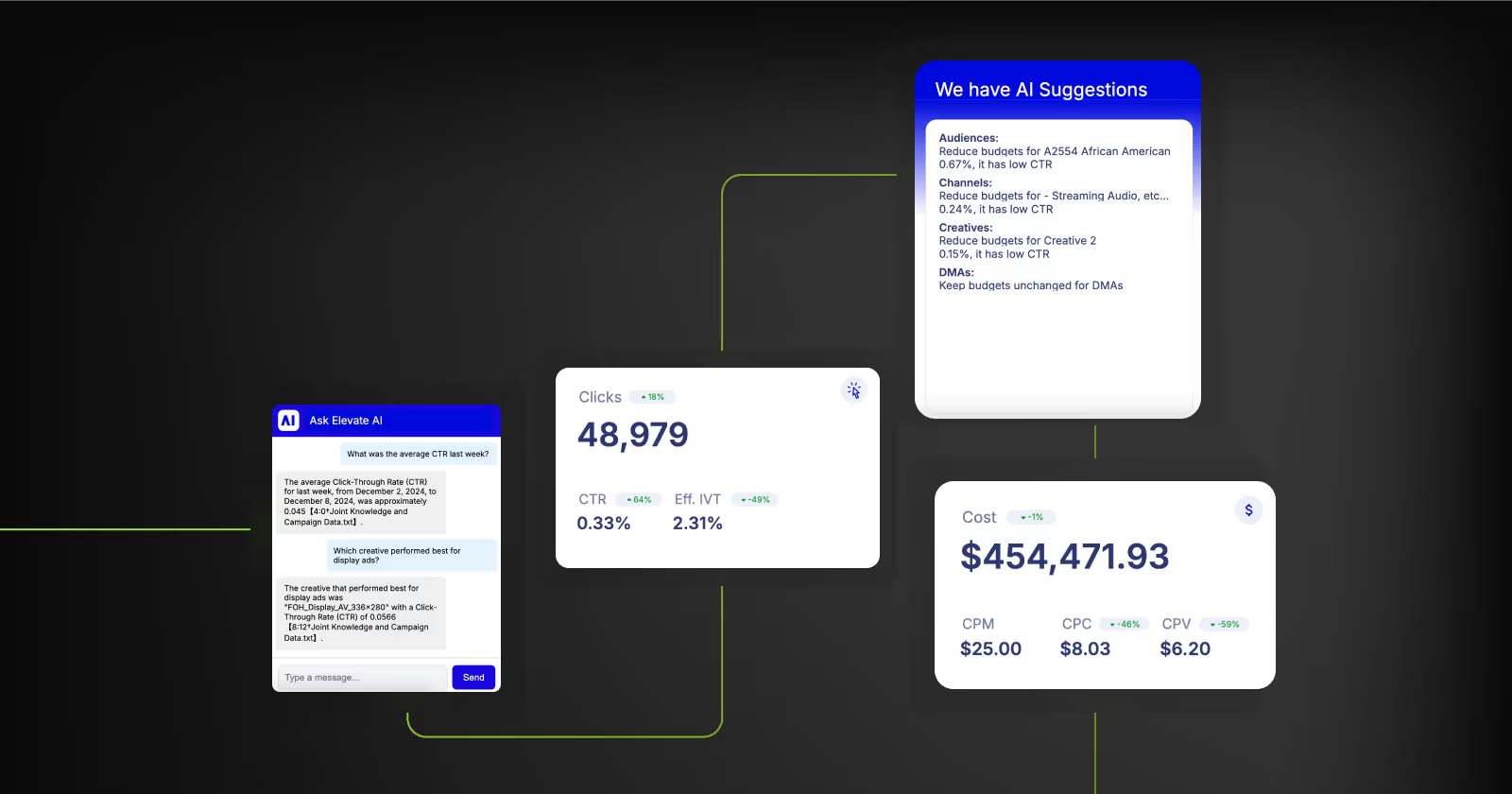
With Elevate's dashboard, nutpods gained near-real-time visibility into performance by audience, channel, and creative—all in one place. The greatest benefit, as Nick puts it, was the ability to "get insights faster and act with confidence when making decisions on how to tweak the campaign."
The impact was immediate. The team was running a test across several audience segments, including a narrower cohort of parents with children alongside broader groups. When two KPIs—impression efficiency and click-through rate—simultaneously flagged underperformance for one segment, the team diagnosed the issue and reallocated budget within a single week.
"Both KPIs lining up together was a pretty quick signal," Nick explains. "We asked ourselves—is it the size of the audience driving the inefficiencies? Or is the message just not resonating? Both of those things combined enabled us to move pretty quickly."
They also identified a sub-audience that was consistently outperforming on audio through their retail media data from Kroger and Albertsons. Rather than spreading budget thinly, they concentrated on spending behind what was working.
"It enabled us to test, iterate, and move with some nimbleness—switch out creative that was underperforming, eliminate audiences that weren't performing, and refocus our resources behind the audiences that were better performers," Nick says.
That kind of in-flight agility is precisely what programmatic should deliver—but rarely does when performance data sits in disconnected spreadsheets and arrives days or weeks late.
From data bottleneck to shared intelligence
Perhaps the most meaningful change wasn't speed—it was access. Elevate removed the single-point-of-failure reporting model. Multiple team members now pull insights independently, arrive at meetings with different observations from the same data, and make collective decisions faster.
"It's democratized insights for our team," says Nick. "Rather than one person being the 'data monkey' and communicating that data up the chain, now we all have access. I can look in and see something, my boss can look and see something, my peers can too—and we can all see different things in the data and have a richer conversation about it."
The workflow impact has been tangible. Internal reporting that previously took three to four hours now takes 30 minutes. With data refreshing close to real time, Nick was pulling performance numbers the morning of weekly sales meetings rather than spending days compiling them. "The insights are a lot easier to extrapolate because of how the dashboard is set up," he says. "I'd have slides ready to go and just focus on the insight for the data points I wanted to communicate."
Looking ahead
nutpods currently uses the reporting side of Elevate, but the team sees clear value in the platform's research and inventory discovery features—particularly the ability to identify white space across channels in real time. "Before this tool, we'd have annual discussions about the media landscape and where we wanted to allocate resources," Nick says. "Having more real-time access to that information allows us to say, 'maybe audio and video isn't where we want to be right now—let's shift more towards social.' It enables us to take advantage of opportunities as they come up."
At AI Digital, we built Elevate to do exactly this: give brands and agencies a single intelligence layer that replaces fragmentation with clarity. nutpods is proof that when teams can see what's happening—and act on it fast—the compounding effect on campaign performance is significant.
Elevate is available now. Visit aidigital.com/elevate or contact elevate-demo@aidigital.com.
.svg)
.svg)


.avif)