Location-Based Advertising: How to Drive Real Results Across Channels
Tatev Malkhasyan
June 9, 2026
20
minutes read
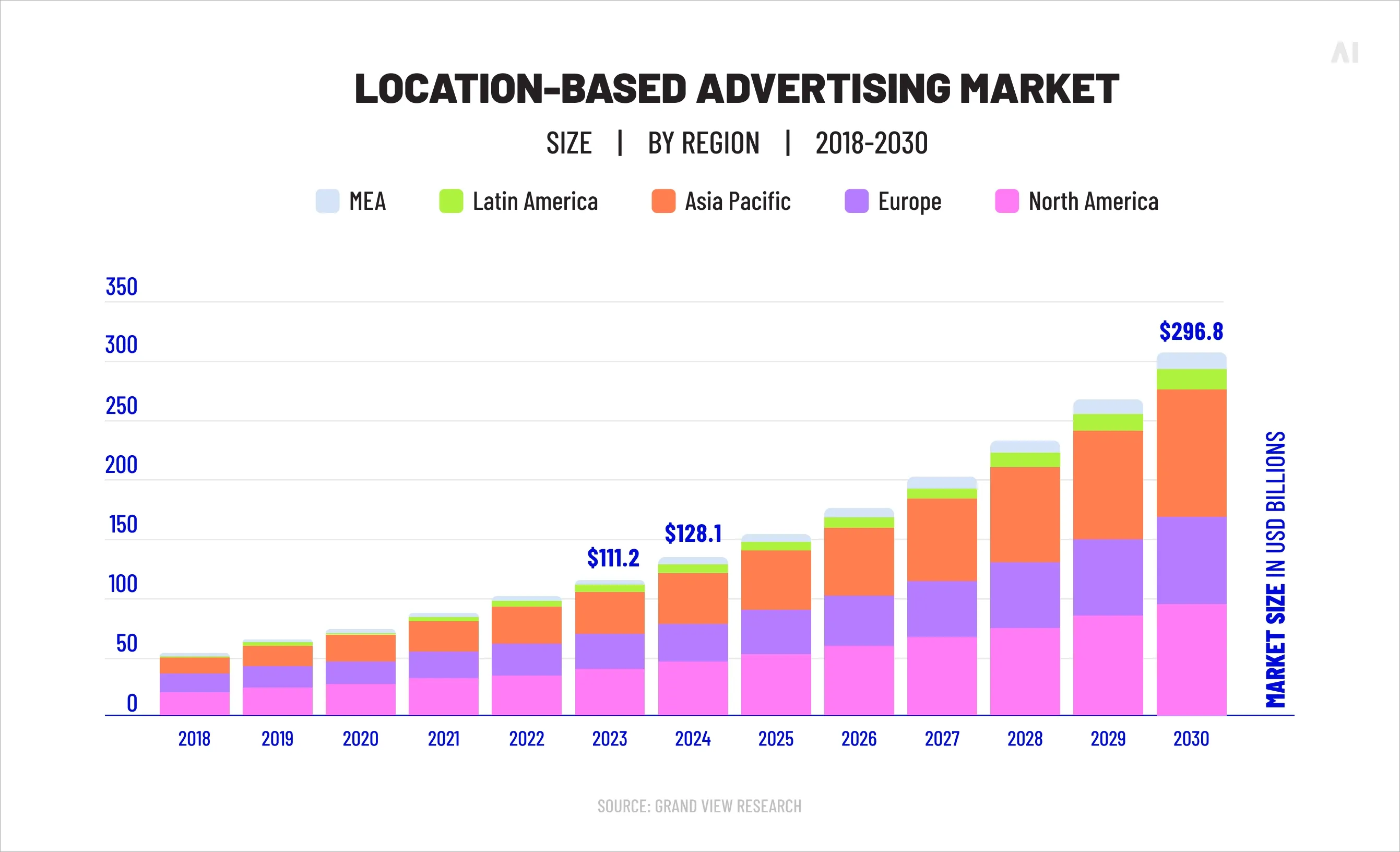
Digital advertising is under growing pressure to prove what happens after the impression: store visits, appointments, calls, bookings, local sales, and market-level growth. That is why location data has become a key signal for connecting online exposure with offline behavior. It helps marketers understand where demand exists, how audiences move through real-world environments, and which markets deserve investment. But widespread use does not always mean effective use. Many location-based campaigns still rely on weak data, unclear consent, broad radius targeting, inconsistent POI mapping, and attribution models that overstate impact. The real opportunity is not just targeting people by location; it is building campaigns where accuracy, transparency, and measurable business impact are designed from the start.
Location based advertising has become one of the most effective ways for brands to connect digital campaigns with real-world customer behavior. As consumers move between mobile apps, streaming platforms, retail stores, and physical environments, marketers are under increasing pressure to prove that advertising drives measurable business outcomes — not just clicks or impressions.
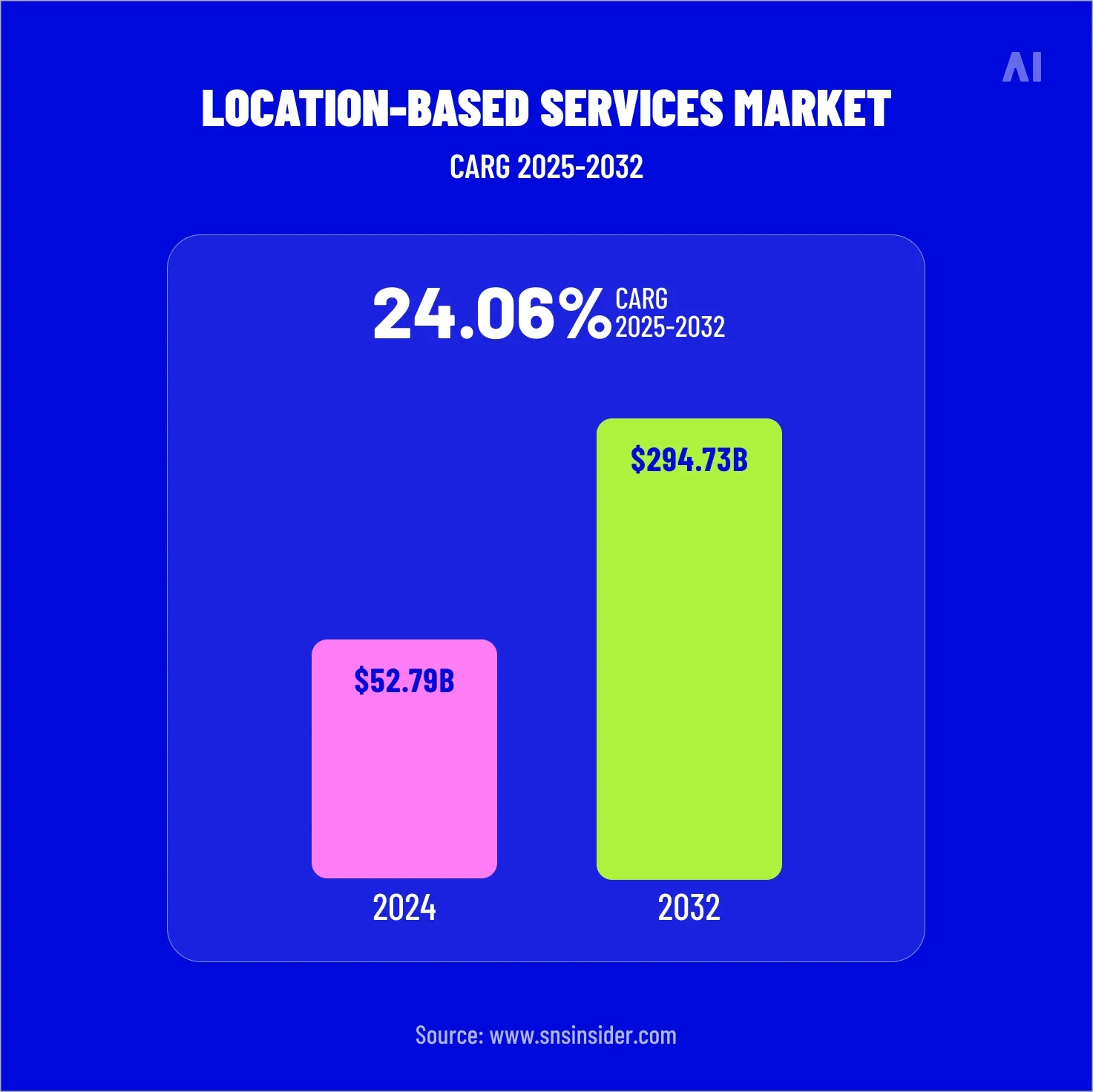
This shift is accelerating investment in location advertising across mobile, CTV, retail media, and DOOH. According to the IAB 2026 Outlook report, retail media ad spend is projected to grow by 15.6%, while CTV is expected to increase by 13.8% as advertisers prioritize channels tied to measurable performance and omnichannel growth. At the same time, marketers are investing more heavily in first-party data, offline attribution, and cross-channel measurement to better understand how advertising influences store visits and purchasing decisions.
However, many location based ads still fail to deliver meaningful business impact. The problem is not the idea of location targeting itself — it is how the data is used. Poor-quality signals, inaccurate attribution, fragmented supply paths, and weak measurement models often create campaigns that appear precise but generate little incremental value. Reaching users near a store does not automatically lead to conversions, revenue growth, or long-term customer acquisition.
Modern location-based advertising has evolved far beyond simple geotargeting. Today, brands use location signals across mobile, CTV, and programmatic DOOH to improve audience relevance, optimize media delivery, and connect digital exposure with offline behavior.
Advanced location based mobile advertising strategies now combine movement patterns, contextual signals, household-level targeting, and AI-driven optimization to improve campaign performance across channels.
This article explains what is location based advertising, how location data works in modern media environments, and which targeting strategies actually drive results. It also explores measurement, attribution challenges, privacy considerations, and practical frameworks for building scalable, high-performing campaigns with stronger ROI.
What is location-based advertising (and why it matters)?
Location-based advertising is a digital advertising strategy that uses real-world location signals to deliver ads based on where consumers are, where they have been, or where they are likely to go. While early location based mobile advertising focused mainly on GPS targeting within apps, modern location advertising now extends across mobile, CTV, retail media, and digital out-of-home (DOOH) environments.
Today, marketers use location data to connect digital campaigns with physical-world actions such as store visits, foot traffic, and regional purchasing behavior. This has become increasingly important as customer journeys move across multiple devices and channels. A consumer may see a CTV ad at home, receive a mobile promotion near a retail store, and later encounter a DOOH campaign during their commute — all within the same buying journey.
The growing importance of omnichannel media consumption is accelerating investment in location based ads. At the same time, advertisers are placing greater focus on understanding how media exposure influences real business outcomes rather than relying only on clicks or impressions.
Modern location advertising is therefore no longer only about proximity. Brands increasingly use location intelligence to improve audience targeting, optimize media delivery, and better understand consumer intent across channels. However, AI Digital emphasizes that targeting precision alone does not guarantee strong performance. Campaign effectiveness depends heavily on data quality, transparent supply paths, and accurate measurement strategies.
Location-based advertising improves performance by aligning media delivery with real-world intent. Instead of targeting broad audience assumptions, brands can focus on where demand is actually happening — whether that’s a city, trade area, competitor location, or high-intent venue.
The biggest advantage is relevance. Ads tied to local context, nearby inventory, or service availability tend to feel more useful and timely than generic national campaigns. That often translates into stronger engagement, higher conversion efficiency, and lower wasted spend.
For marketers, location also creates better operational control:
Allocate budget by market performance
Prioritize high-intent geographic areas
Suppress regions with low fulfillment capacity
Adapt messaging to local conditions and behaviors
💡Location-based advertising works best when geography is treated as a business constraint, not just a targeting filter.
Another major benefit is measurement. Unlike many upper-funnel tactics, location-based campaigns can support real-world outcome tracking, including:
Store visits
Calls and directions
Appointment bookings
Incremental lift by market
Local conversion performance
This is especially valuable in omnichannel environments where brands need clearer visibility into how mobile, CTV, paid social, and DOOH contribute to offline actions.
For businesses operating across multiple markets, location-based advertising also improves consistency. Teams can scale campaigns nationally while still adapting creative, offers, and budget allocation at the regional level — without rebuilding campaigns from scratch.
Location-based advertising depends on one thing: turning physical-world signals into usable media decisions. The challenge is that not all location data is equally accurate, equally scalable, or equally reliable for measurement.
In practice, advertisers rarely rely on a single signal source. Most campaigns combine multiple location inputs to balance precision, scale, privacy, and cost efficiency.
💡 The goal is not maximum precision at all times. The goal is decision-quality data that is accurate enough for the business outcome you’re optimizing.
Core data sources: GPS, IP, Wi-Fi, SDKs
Location data generally comes from four core sources, each with different strengths and limitations.
GPS remains the strongest deterministic signal for outdoor movement because it uses device-level coordinates. It’s commonly used for geofencing, trade-area analysis, and visit modeling.
IP-based location is less precise but highly scalable. It’s widely used in CTV, household targeting, and market-level delivery where ZIP or city-level accuracy is sufficient.
Wi-Fi signals become useful in dense urban environments or indoor locations where GPS weakens. Retail environments, airports, and large venues often rely on Wi-Fi-assisted positioning for better stability.
SDK-based signals come from apps that collect permissioned location data. In practice, SDK ecosystems became a major foundation for mobile location advertising, though governance and sourcing standards matter significantly in 2026.
💡 A location signal is only as trustworthy as the consent framework and validation process behind it. For marketers, the operational lesson is straightforward: use the least sensitive signal that still supports campaign performance and measurement needs.
Location data generally falls into two categories: deterministic and probabilistic.
Deterministic data comes from direct signals with a stronger confidence level, such as GPS coordinates, logged-in user events, first-party app interactions, or verified device activity. It provides higher confidence for targeting and attribution because the signal is observed directly rather than inferred.
Probabilistic data is modeled. Instead of confirming an exact action or location, it estimates likely behavior using patterns, device relationships, IP ranges, movement trends, or aggregated audience signals.
This distinction matters because it directly affects campaign trust.
Deterministic data tends to improve:
Visit validation
Store attribution
Audience qualification
High-intent targeting
Probabilistic data tends to improve:
Reach and scalability
Cross-device estimation
Market-level forecasting
Broader audience modeling
In reality, most large omnichannel campaigns combine both. Deterministic signals handle validation and precision workflows, while probabilistic systems help extend scale efficiently.
The risk appears when marketers treat modeled data as exact truth. That’s where attribution inflation, weak incrementality claims, and reporting inconsistency usually begin.
💡 Precision is not the same as certainty. Strong location-based advertising depends on transparent methodology, not just tighter coordinates.
Types of location-based targeting
Location-based targeting is not one tactic. It’s a spectrum of approaches that vary by precision, scale, intent signal, and operational complexity.
Some methods prioritize broad market efficiency. Others focus on immediate proximity and high-intent behavior. The right approach depends less on “better technology” and more on campaign objectives, fulfillment capability, and measurement strategy.
💡 The best targeting strategy is usually the one that matches operational reality, not the one with the highest theoretical precision.
Geotargeting
Geotargeting delivers ads based on broader geographic areas such as countries, regions, states, cities, ZIP codes, or DMAs. It’s the most scalable form of location-based targeting because it prioritizes market-level relevance over exact proximity.
This approach works particularly well when advertisers need:
Regional budget allocation
Localized messaging at scale
Service-area targeting
Market-by-market performance control
For many brands, geotargeting is the operational foundation of local advertising because it keeps campaigns aligned with fulfillment realities like inventory, logistics, staffing, or franchise coverage.
It’s also heavily used in CTV and omnichannel planning where household-level delivery matters more than real-time movement tracking.
💡 Geotargeting is less about precision and more about controlling where advertising spend works hardest.
Geofencing
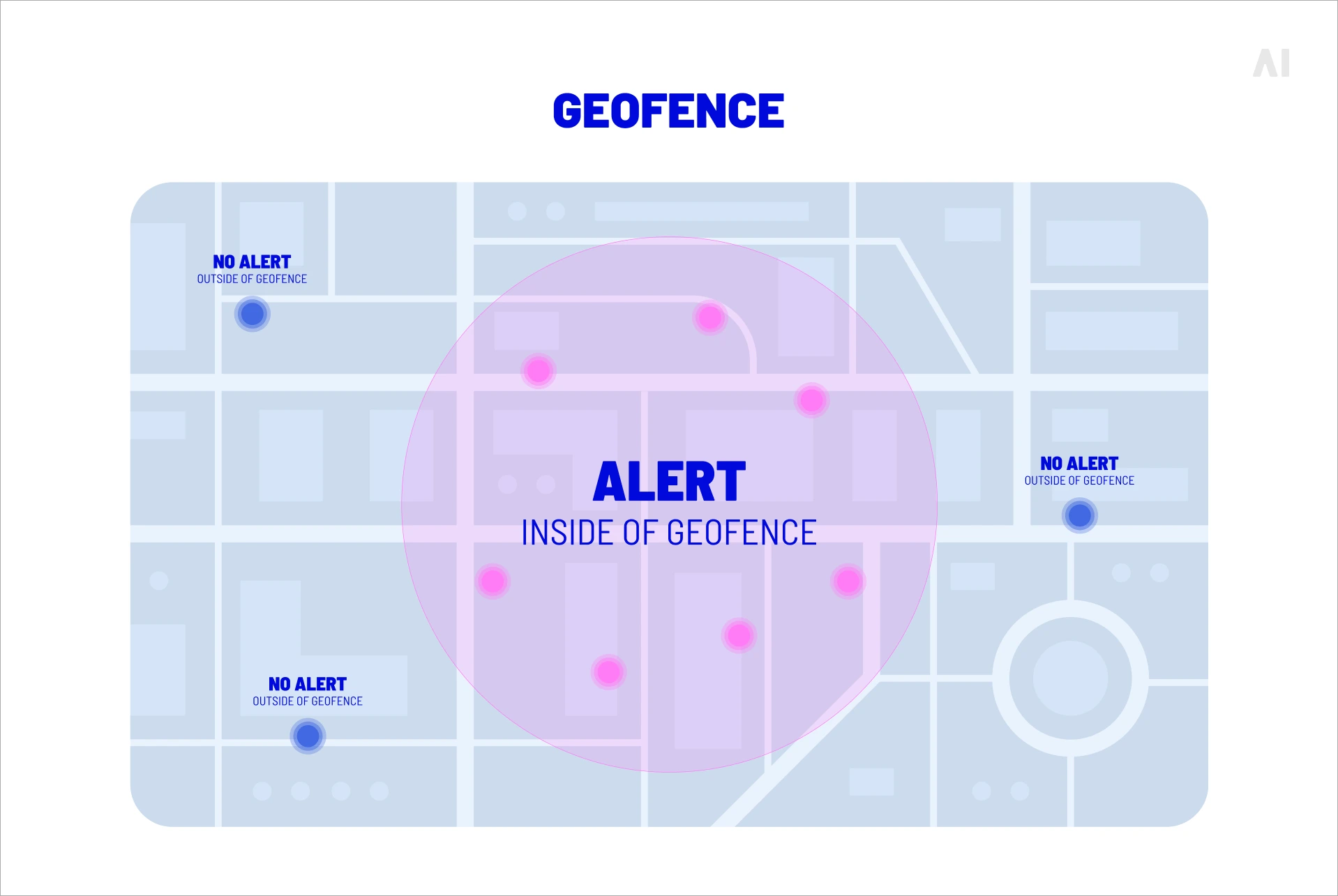
Geofencing targets users who enter or dwell within a defined geographic boundary around a real-world location. These boundaries can be built around stores, venues, event spaces, competitor locations, airports, or retail corridors.
Modern geofencing strategies rarely rely on simple radius targeting alone. Most advanced campaigns use polygon-based boundaries, dwell-time filters, and visit validation logic to reduce false positives.
For example, a retailer may target users who spent at least five minutes inside a shopping center rather than everyone who merely passed nearby.
💡 A clean geofence matters more than an aggressive one. Poor boundary logic creates noisy audiences and weak measurement.
Geo-conquesting
Geo-conquesting targets users near competitor locations or within competitor trade areas to capture existing category demand.
The logic is straightforward: someone physically visiting a competitor often signals stronger purchase intent than someone matching an online interest category alone.
Common applications include:
Automotive dealership competition
QSR and retail switching campaigns
Gym and fitness memberships
Telecom and service-provider acquisition
However, aggressive conquesting can create inefficient spend if targeting becomes too broad or if visit qualification is weak.
Strong geo-conquesting programs typically:
Use tight trade-area definitions
Apply dwell-time rules
Exclude low-intent transient traffic
Sequence creative based on local relevance
💡 Geo-conquesting works best when the location itself signals buying intent, not just physical presence.
Hyperlocal targeting
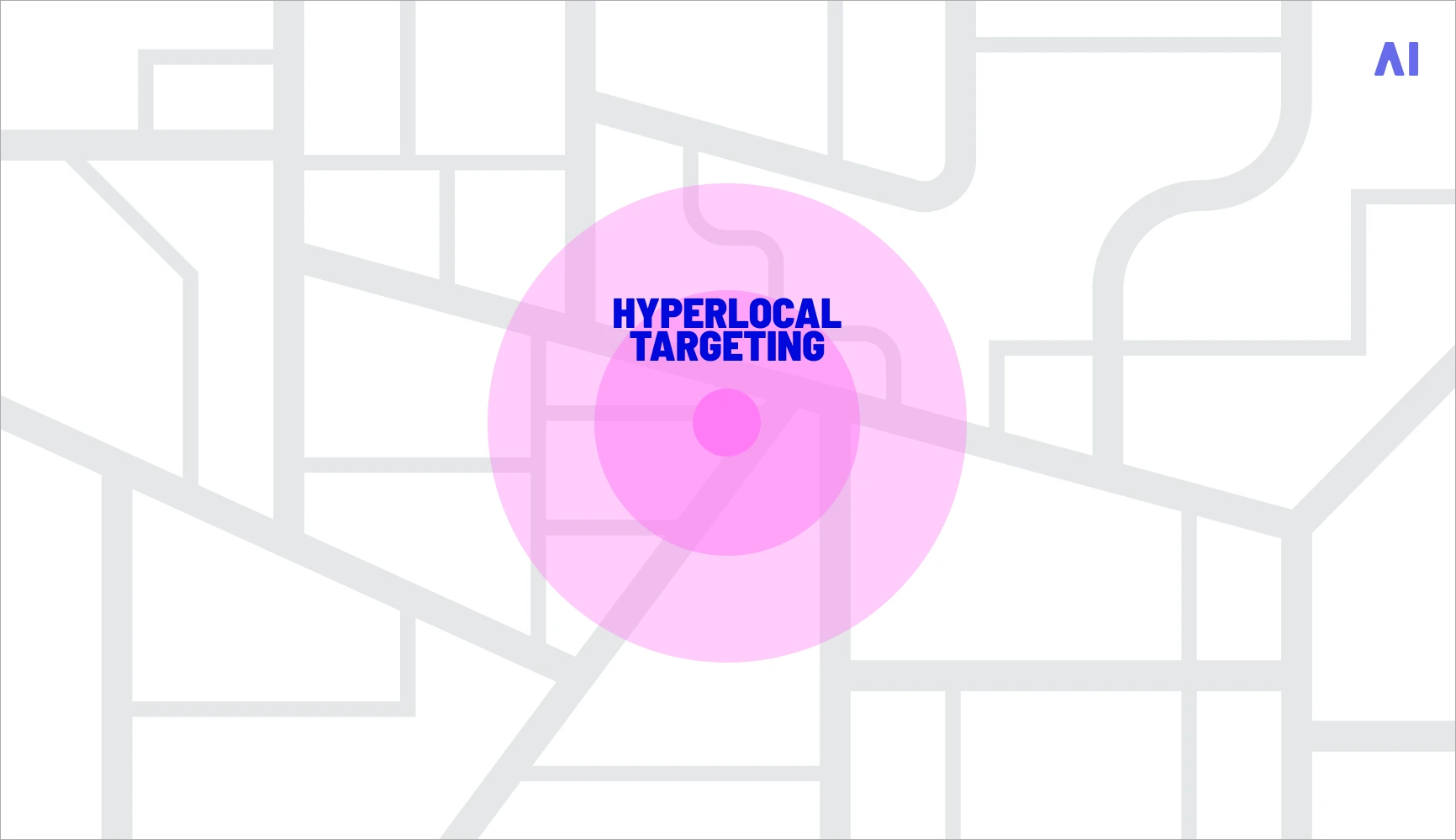
Hyperlocal targeting focuses on extremely small geographic zones or real-time proximity signals to capture users during high-intent moments.
Instead of targeting an entire city or market, advertisers narrow delivery to:
Specific blocks or venues
Immediate store surroundings
Event environments
Transit hubs
Venue interiors
This strategy is designed for immediacy. The closer the user is to a decision point, the more relevance matters.
Hyperlocal campaigns often support:
Flash promotions
Nearby inventory messaging
Last-minute offers
Real-time foot traffic activation
Local call-to-action campaigns
Beacons represent one form of hyperlocal infrastructure. These small Bluetooth-based devices detect nearby mobile devices within controlled physical environments such as retail stores, stadiums, or airports.
Because beacon signals operate at short range, they can help trigger highly contextual experiences, including:
In-store promotions
Product-level messaging
Loyalty activation
Indoor navigation workflows
💡 Hyperlocal targeting succeeds when timing, proximity, and creative relevance work together
The strongest location-based advertising campaigns are not built around “precision” alone. They combine geographic relevance, channel coordination, and measurable business outcomes.
In practice, location data becomes most valuable when it improves decisions across media planning, creative delivery, and performance measurement simultaneously.
The examples below show how brands are using location-based advertising across retail, CTV, and DOOH environments to drive measurable impact in 2026.
💡 High-performing location-based campaigns usually solve operational problems first — store traffic, market efficiency, inventory alignment, or service-area coverage — before they solve media problems.
Retail and store visits
Denny’s used mobile location analytics to promote its “Bring Your Own Skillet” breakfast campaign and drive more restaurant visits. By targeting frequent fast-food customers near Denny’s and competitor locations, the campaign generated 25,000 additional in-store visits, with 12% of exposed users visiting within two weeks. A post-ad survey also showed a strong loyalty lift, with exposed audiences 138% more likely to return to Denny’s.
Retail remains one of the clearest use cases for location-based advertising because physical movement directly connects to purchasing behavior.
A common strategy combines:
Geotargeting for market-level budget allocation
Geofencing around stores or competitor locations
Mobile and paid social activation
Localized offers tied to inventory or promotions
For example, a regional grocery chain running seasonal promotions may activate mobile ads within a five-mile trade area around store locations while suppressing regions with lower inventory availability.
The execution typically includes:
Dynamic creative by store location
Real-time promotions tied to inventory
Local weather or event triggers
Mobile directions and click-to-call extensions
The measurable outcome is not just CTR. It’s offline behavior:
Store visits
Basket lift
Loyalty activity
Repeat visitation
Market-level incremental sales
This matters because retail measurement increasingly depends on connecting digital exposure to real-world movement and transactions.
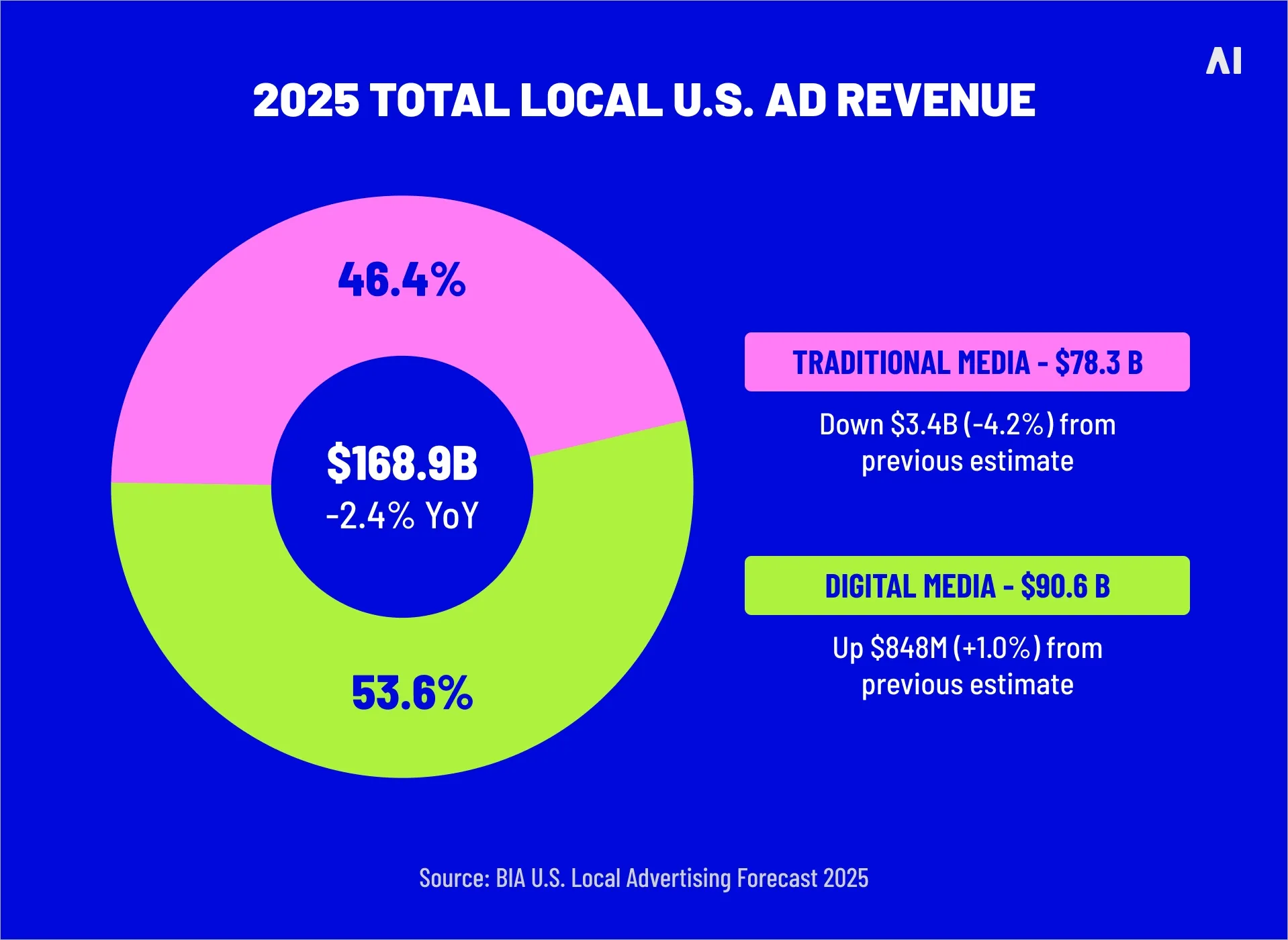
BIA projects U.S. local advertising revenue to remain extremely strong in 2026, with mobile representing the single largest channel share. That reinforces why proximity-driven retail activation continues to attract investment.
💡 Retail location strategy works best when trade areas reflect real shopping behavior, not arbitrary radius targeting.
For retailers scaling across multiple markets, location intelligence also improves forecasting and media allocation. Instead of distributing budgets evenly, teams can prioritize high-performing trade areas, optimize local inventory support, and reduce spend inefficiency.
This is where AI Digital positions location as part of a broader retail media and planning framework — connecting audience movement, forecasting, local inventory realities, and omnichannel measurement into a single operational layer rather than isolated campaigns.
CTV has transformed location-based advertising from a mobile-only tactic into a full omnichannel planning layer.
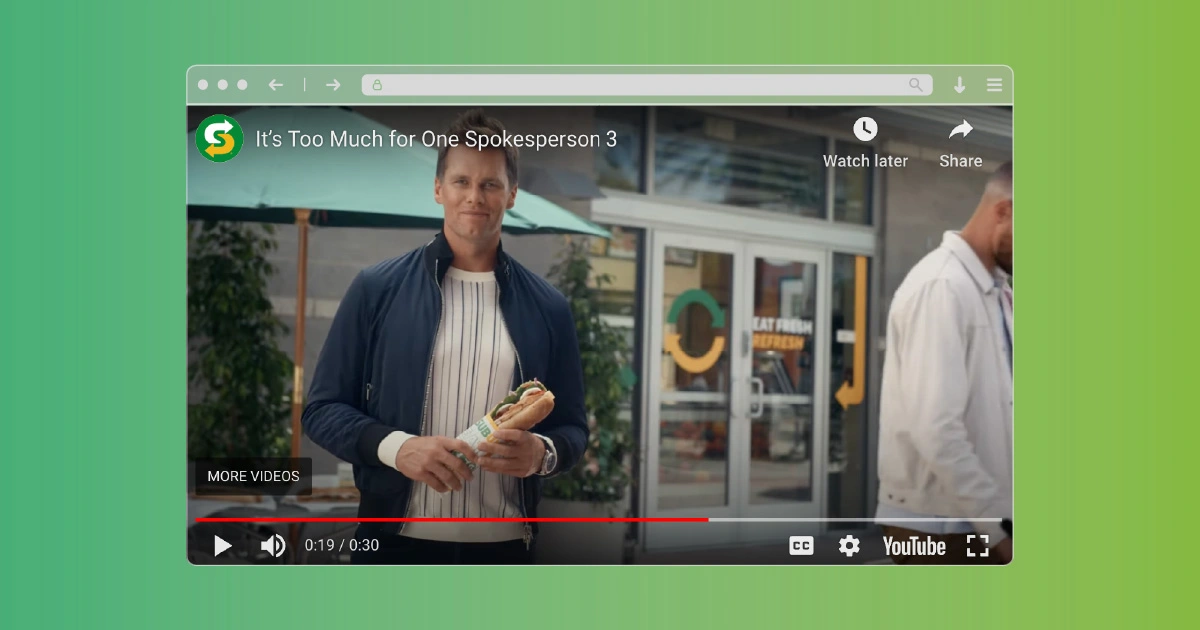
Subway used a celebrity-led Connected TV campaign to build awareness around its refreshed menu and major giveaway. Featuring high-profile names like Tom Brady and Serena Williams, the campaign helped generate excitement for the new offerings and contributed to a 33% increase in sales across CTV platforms.
A typical location-powered CTV strategy works like this:
Ads are delivered to households within selected markets or ZIP clusters
Audience layers refine delivery further using behavioral or first-party signals
Mobile devices help support attribution and response measurement
Geo experiments or lift studies validate offline impact
For example, an automotive brand may run CTV campaigns across dealership service areas while coordinating mobile retargeting for users exposed to connected TV ads.
The value comes from combining:
Premium TV attention
Geographic relevance
Household-level delivery
Cross-device measurement
Nielsen’s The Gauge reported streaming captured 47.5% of total TV viewing in late 2025 — the highest share recorded at the time. That shift is one reason location-powered CTV has become operationally important rather than experimental.
In practice, advertisers often connect CTV exposure with:
Dealership visits
Appointment bookings
Site traffic
Mobile engagement
Incremental lift by market
💡 CTV becomes significantly more actionable when location data helps connect awareness to physical-world outcomes.
Cross-device coordination is particularly important because CTV itself is often a passive viewing environment. Mobile and search channels typically handle the response layer after exposure occurs.
This is where AI Digital positions omnichannel orchestration as the competitive advantage. The objective is not simply serving ads on multiple screens — it’s building a measurement framework where CTV, mobile, paid social, and local activation contribute to a unified view of market performance.
DOOH and outdoor advertising
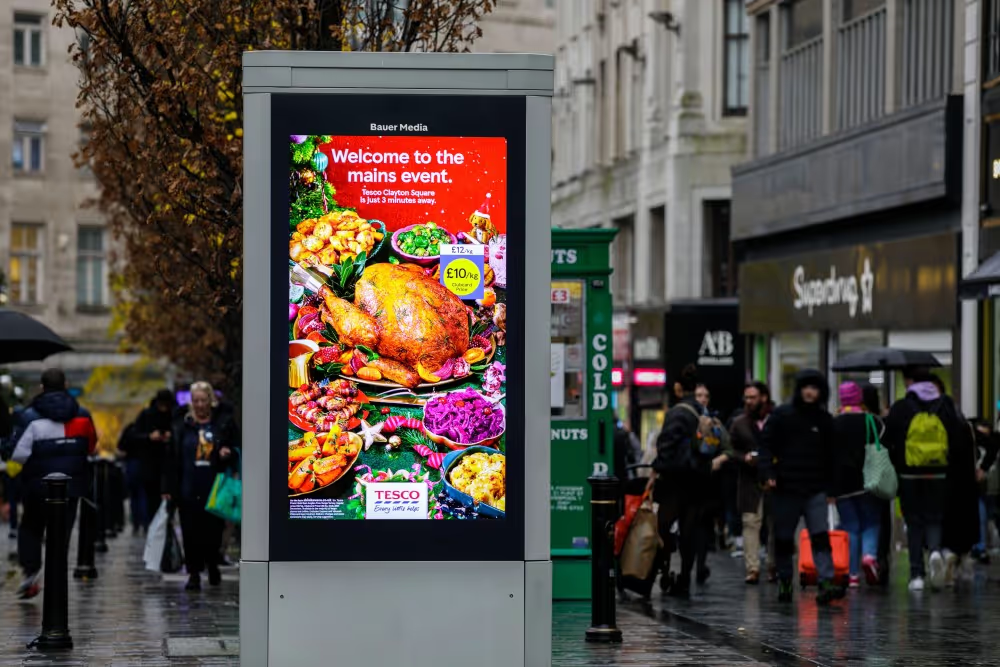
Tesco used dynamic creative optimization during the Christmas season to deliver more relevant local advertising. By using Google API search data to understand what people in different locations were looking for, Tesco adapted its messaging and visuals to match local interests instead of relying on generic holiday ads.
Location data has fundamentally changed how digital out-of-home advertising operates.
Traditional OOH relied on static placement and estimated traffic exposure. Programmatic DOOH adds dynamic delivery based on:
Audience movement
Venue proximity
Traffic conditions
Weather
Daypart
Real-time contextual triggers
For example, a QSR brand may activate DOOH creative near transit hubs during commuting hours while dynamically changing messaging based on weather conditions or store-level promotions.
The strategic advantage is contextual relevance at scale.
Modern DOOH campaigns often combine:
Location-triggered activation
Mobile audience extension
Programmatic bidding
Contextual creative optimization
This creates stronger alignment between:
physical movement,
real-world context,
and media delivery timing.
According to industry growth forecasts, local DOOH investment continues to rise as advertisers prioritize measurable omnichannel reach and real-world visibility.
💡Context is what turns outdoor visibility into actionable attention.
One increasingly common workflow combines DOOH with mobile retargeting:
A consumer is exposed to a DOOH placement near a venue or retail corridor
Mobile devices later receive sequential messaging
Performance is evaluated through market lift or visit trends rather than impression counts alone
This reflects a broader shift in outdoor advertising: from static awareness media toward responsive, data-informed infrastructure.
AI Digital’s positioning around programmatic DOOH focuses on this operational integration layer — where location intelligence, contextual targeting, and omnichannel measurement work together instead of functioning as isolated tactics.
Location-based ads performance should be measured by what changed in the real world, not only by what happened inside the ad platform. Clicks, impressions, and reach still matter, but they are diagnostic. The stronger question is whether the campaign increased visits, conversions, or revenue in the locations that mattered.
A practical measurement framework connects three layers:
Exposure: who saw the ad, where, and through which channel
Action: store visits, calls, directions, bookings, purchases, or loyalty activity
Impact: incremental lift compared with what likely would have happened without the campaign
💡 Location-based measurement works best when visit rules, control groups, and success metrics are defined before launch.
Attribution can help explain how different touchpoints contributed across the journey, but it should not be treated as proof of causality. A customer may see a CTV ad, search later on mobile, pass a DOOH screen, and then visit in person. If every channel claims credit separately, performance can easily be overstated.
Measurement methods and KPIs
Footfall attribution measures whether people exposed to an ad later visited a physical location.
The process usually works like this:
A user is exposed to an ad
A location signal places that user near or inside a defined point of interest
Visit rules decide whether the movement counts as a qualified visit
Results are compared against a benchmark, baseline, or control group
The quality of the result depends on the visit definition. Strong methodologies account for:
POI accuracy: whether the store boundary is mapped correctly
Dwell time: whether the person stayed long enough to count
Recency window: how long after exposure a visit can reasonably be linked
Noise filtering: whether drive-bys, employees, roads, or nearby stores are excluded
Control logic: whether exposed users are compared with a credible non-exposed group
💡 A store visit is not automatically a conversion. It becomes useful only when tied to business outcomes.
The main limitation of location-based measurement is that many results are correlational. A person may see an ad and later visit a store, but that does not prove the ad caused the visit.
Physical movement is affected by:
Brand preference
Store proximity
Seasonality
Promotions
Weather
Competitor activity
Local events
Incrementality testing helps answer the better question: what changed because of the advertising?
Common methods include geo experiments, matched-market tests, holdout groups, suppression tests, and cautious pre/post analysis.
💡 Attribution shows where credit was assigned. Incrementality shows whether the campaign created additional value.For marketers, the practical takeaway is simple: use attribution to understand journeys, but use incrementality to defend investment.
Privacy and the reality of location data
Location data is powerful because it reflects real-world behavior. That is also what makes it sensitive. Movement patterns can reveal where someone lives, works, receives healthcare, studies, worships, or spends private time.
In 2026, the strongest location strategies are not built around collecting the most precise data possible. They use the least sensitive signal that still supports the campaign goal.
💡 Precision is not automatically better. Unnecessary precision increases risk without always improving performance.
Compliance basics and responsible data use
Responsible location-based advertising starts with consent, transparency, and data minimization.
Marketers need to know:
Where the data came from
Whether users gave valid consent
How opt-outs are handled
How long data is retained
Whether it can be used for targeting, measurement, or both
Which vendors touch the data
For GDPR-aligned campaigns, advertisers need a lawful basis for processing, clear disclosure, purpose limitation, and retention controls. Precise location should be treated as high-risk and avoided when broader geographic or contextual signals are enough.
Practical safeguards include:
Use aggregated data where possible
Avoid sensitive locations
Audit vendor sourcing and permissions
Maintain clear consent and opt-out workflows
Document how audiences and visit metrics are built
Sensitive locations should be no-go categories, including hospitals, religious institutions, schools, shelters, addiction treatment centers, and places linked to vulnerable behavior.
💡If a campaign would feel uncomfortable to explain plainly to a customer, it is probably not a durable strategy.
Location-based advertising is being reshaped by signal loss. iOS, Android, browser restrictions, app permission prompts, and walled gardens have reduced access to persistent identifiers and precise device-level movement data.
This weakens both targeting accuracy and attribution confidence. Campaigns that depend too heavily on individual-level tracking become fragile when signals disappear or cannot be matched across channels.
Future-proof strategies include:
Aggregated location intelligence: market, trade-area, and cohort-level insights
Contextual targeting: weather, venue type, event timing, or local content signals
First-party data integration: CRM, loyalty, app, and store data where consent allows
Geo-based incrementality testing: market-level impact instead of only user-level attribution
Consistent geo taxonomy: shared markets, store IDs, POIs, and service areas
💡The future of location-based advertising is not perfect user tracking. It is better planning under imperfect signals.
How to build a high-performing location-based ads strategy
A high-performing location-based ads strategy does not start with geofences, device IDs, or platform settings. It starts with a business question.
Are you trying to increase store visits? Improve regional efficiency? Defend market share? Reduce wasted spend? Grow reach across high-value trade areas?
The answer determines everything downstream: the data you use, the channels you activate, the supply paths you choose, and the measurement model you trust.
💡 Location-based advertising works when location is treated as a planning layer, not a campaign add-on.
A strong strategy should connect six decisions:
Business outcome
Location signal quality
Channel mix
Supply-path transparency
AI-driven optimization
Incrementality-based measurement
This is where AI Digital’s Open Garden approach becomes valuable. Instead of managing location-based campaigns inside disconnected platforms, advertisers need a framework that connects planning, activation, supply quality, and measurement across the open internet.
Before choosing a location tactic, define what success means.
A retail campaign built for store visits needs a different setup from a CTV campaign built for regional reach. A QSR campaign focused on immediate foot traffic needs different signals than a healthcare provider focused on service-area awareness.
Common business outcomes include:
Increasing qualified store visits
Improving cost per visit
Growing sales in priority markets
Defending against competitors
Expanding awareness in new regions
Improving local conversion rates
The mistake is launching with a tactic-first mindset: “Let’s run geofencing” or “Let’s target people near competitors.” Without a clear outcome, campaign performance becomes difficult to evaluate and easy to overstate.
💡 If the business goal is unclear, location data only creates more complicated reporting.
2. Choose the right channels and supply paths
Location-based campaigns usually perform best when channels play different roles.
Mobile captures proximity, movement, and local intent.
CTV builds household-level reach in priority markets.
DOOH adds contextual visibility in physical environments.
Display and video extend reach and support retargeting.
The channel mix should follow the customer journey, not the vendor pitch. Supply quality matters just as much. Poor inventory, unclear supply chains, duplicated auctions, and low-quality location data can weaken performance before optimization even begins.
⚡That is why efficient supply-path management is critical. AI Digital’s Smart Supply helps advertisers improve supply quality, reduce unnecessary intermediaries, and create cleaner paths between media investment and measurable outcomes.
💡 Better targeting cannot compensate for weak supply. If the path to inventory is inefficient, performance will leak before the campaign reaches the customer.
Location data becomes useful only when it informs decisions.
Raw signals can show where people are, where they have been, or which areas indicate demand. But performance depends on how those signals are translated into audience strategy, budget allocation, creative relevance, and measurement.
AI-driven decisioning helps teams identify:
High-value trade areas
Underperforming markets
Budget waste by region
Audience overlap across channels
Local patterns that should influence creative
Signals that are too weak to justify spend
⚡AI Digital’s Elevate supports this layer by turning campaign, audience, and performance signals into actionable insights. The value is not automation for its own sake. The value is faster, clearer optimization.
💡 Bad data usage creates confident-looking reports and weak decisions. Strong optimization turns location signals into accountable performance logic.
4. Ensure transparency and control
Location-based advertising becomes harder to manage when execution is fragmented across platforms, vendors, channels, and reporting systems.
One team may define a market by ZIP code. Another may use radius targeting. A CTV partner may report household reach. A mobile partner may report store visits. A DOOH partner may report estimated exposure.
Without a shared operating model, results become difficult to compare.
⚡AI Digital’s Open Garden Framework is designed for this problem. It gives advertisers a way to reduce fragmentation, improve visibility, and coordinate programmatic activity without being trapped inside closed ecosystems.
For location-based advertising, that means stronger control over:
Supply paths
Data usage
Audience definitions
Channel coordination
Measurement logic
Budget allocation
💡 Transparency is not only a reporting benefit. It is what allows advertisers to validate performance, control spend, and scale with confidence.
5. Align execution with goals
Location-based advertising works best when targeting, creative, channel mix, and measurement all support the same objective.
If the goal is foot traffic, creative should emphasize proximity, availability, and clear local action.
If the goal is regional awareness, CTV and DOOH may play a larger role. If the goal is conversion efficiency, mobile, search, and retargeting need tighter coordination.
Misalignment weakens performance. A campaign can have strong location data but still fail if the message is generic, the offer is irrelevant, or the channel mix does not match the buying journey.
AI Digital’s broader capabilities connect these pieces across strategy, activation, media quality, and performance measurement.
This prevents teams from relying only on surface-level metrics such as impressions, CTR, or attributed visits.
Over-targeting is another common risk. Narrow audiences can look efficient in reporting but fail to scale. High frequency can also distort results, especially when the same users are repeatedly exposed across mobile, CTV, and DOOH.
💡 Optimize for incremental business impact, not the cleanest-looking dashboard.
For AI Digital, this is where the Open Garden model becomes especially important.
Location-based advertising is no longer a single-channel tactic. It needs a connected operating system for supply, data, activation, transparency, and measurement.The goal is simple: make location intelligence usable, governable, and measurable across the full funnel.
Conclusion: Is location-based advertising worth the investment?
Location-based advertising is worth the investment when it helps marketers make better decisions across planning, activation, and measurement. Its value is not limited to targeting people near a store. The real advantage is using location intelligence to understand where demand exists, which markets deserve investment, and how media activity connects to real-world outcomes.
But success depends on more than precision.
A campaign can use highly specific geo signals and still underperform if the data quality is weak, the supply path is inefficient, the audience is too narrow, or the measurement model overstates results. Precision without governance, scale, and transparency can quickly become wasted budget.
💡 Location-based advertising works best when location is treated as an operating layer, not a standalone targeting trick.
Location data works best when tied to clear business goals, not just targeting tactics.
Precision targeting without scale, consent, or quality data can lead to inefficient spend.
Real impact requires incrementality, not just reported conversions or attributed visits.
Strong performance comes from combining location signals with the right channels, supply paths, creative, and measurement strategy.
This is where AI Digital’s Open Garden Framework becomes especially relevant.
Location-based advertising now runs across mobile, CTV, DOOH, social, search, and programmatic environments. Without a connected operating model, teams end up with fragmented data, inconsistent measurement, and limited visibility into what actually drives performance.
The Open Garden Framework helps advertisers move beyond closed, disconnected execution. It creates a more transparent structure for coordinating media, supply, data, and measurement across channels — so location intelligence becomes usable, governable, and accountable.
For marketers, the question is not simply whether location-based advertising works. The better question is whether the strategy is structured well enough to prove that it works.
When location data is connected to clear goals, quality supply, privacy-aware activation, and incrementality-based measurement, it can become a durable performance engine for real-world growth.
⚡ If you’re evaluating how location-based advertising fits into your broader media strategy, AI Digital can help you build a more transparent, measurable, and scalable approach through its Open Garden model. Get in touch with AI Digital.
Blind spot
Key issues
Business impact
AI Digital solution
Lack of transparency in AI models
• Platforms own AI models and train on proprietary data • Brands have little visibility into decision-making • "Walled gardens" restrict data access
• Inefficient ad spend • Limited strategic control • Eroded consumer trust • Potential budget mismanagement
Open Garden framework providing: • Complete transparency • DSP-agnostic execution • Cross-platform data & insights
Optimizing ads vs. optimizing impact
• AI excels at short-term metrics but may struggle with brand building • Consumers can detect AI-generated content • Efficiency might come at cost of authenticity
• Short-term gains at expense of brand health • Potential loss of authentic connection • Reduced effectiveness in storytelling
Smart Supply offering: • Human oversight of AI recommendations • Custom KPI alignment beyond clicks • Brand-safe inventory verification
The illusion of personalization
• Segment optimization rebranded as personalization • First-party data infrastructure challenges • Personalization vs. surveillance concerns
• Potential mismatch between promise and reality • Privacy concerns affecting consumer trust • Cost barriers for smaller businesses
Elevate platform features: • Real-time AI + human intelligence • First-party data activation • Ethical personalization strategies
AI-Driven efficiency vs. decision-making
• AI shifting from tool to decision-maker • Black box optimization like Google Performance Max • Human oversight limitations
• Strategic control loss • Difficulty questioning AI outputs • Inability to measure granular impact • Potential brand damage from mistakes
Managed Service with: • Human strategists overseeing AI • Custom KPI optimization • Complete campaign transparency
Fig. 1. Summary of AI blind spots in advertising
Dimension
Walled garden advantage
Walled garden limitation
Strategic impact
Audience access
Massive, engaged user bases
Limited visibility beyond platform
Reach without understanding
Data control
Sophisticated targeting tools
Data remains siloed within platform
Fragmented customer view
Measurement
Detailed in-platform metrics
Inconsistent cross-platform standards
Difficult performance comparison
Intelligence
Platform-specific insights
Limited data portability
Restricted strategic learning
Optimization
Powerful automated tools
Black-box algorithms
Reduced marketer control
Fig. 2. Strategic trade-offs in walled garden advertising.
Core issue
Platform priority
Walled garden limitation
Real-world example
Attribution opacity
Claiming maximum credit for conversions
Limited visibility into true conversion paths
Meta and TikTok's conflicting attribution models after iOS privacy updates
Data restrictions
Maintaining proprietary data control
Inability to combine platform data with other sources
Amazon DSP's limitations on detailed performance data exports
Cross-channel blindspots
Keeping advertisers within ecosystem
Fragmented view of customer journey
YouTube/DV360 campaigns lacking integration with non-Google platforms
Black box algorithms
Optimizing for platform revenue
Reduced control over campaign execution
Self-serve platforms using opaque ML models with little advertiser input
Performance reporting
Presenting platform in best light
Discrepancies between platform-reported and independently measured results
Consistently higher performance metrics in platform reports vs. third-party measurement
Fig. 1. The Walled garden misalignment: Platform interests vs. advertiser needs.
Key dimension
Challenge
Strategic imperative
ROAS volatility
Softer returns across digital channels
Shift from soft KPIs to measurable revenue impact
Media planning
Static plans no longer effective
Develop agile, modular approaches adaptable to changing conditions
Brand/performance
Traditional division dissolving
Create full-funnel strategies balancing long-term equity with short-term conversion
Capability
Key features
Benefits
Performance data
Elevate forecasting tool
• Vertical-specific insights • Historical data from past economic turbulence • "Cascade planning" functionality • Real-time adaptation
• Provides agility to adjust campaign strategy based on performance • Shows which media channels work best to drive efficient and effective performance • Confident budget reallocation • Reduces reaction time to market shifts
• Dataset from 10,000+ campaigns • Cuts response time from weeks to minutes
• Reaches people most likely to buy • Avoids wasted impressions and budgets on poor-performing placements • Context-aligned messaging
• 25+ billion bid requests analyzed daily • 18% improvement in working media efficiency • 26% increase in engagement during recessions
Full-funnel accountability
• Links awareness campaigns to lower funnel outcomes • Tests if ads actually drive new business • Measures brand perception changes • "Ask Elevate" AI Chat Assistant
• Upper-funnel to outcome connection • Sentiment shift tracking • Personalized messaging • Helps balance immediate sales vs. long-term brand building
• Natural language data queries • True business impact measurement
Open Garden approach
• Cross-platform and channel planning • Not locked into specific platforms • Unified cross-platform reach • Shows exactly where money is spent
• Reduces complexity across channels • Performance-based ad placement • Rapid budget reallocation • Eliminates platform-specific commitments and provides platform-based optimization and agility
• Coverage across all inventory sources • Provides full visibility into spending • Avoids the inability to pivot across platform as you’re not in a singular platform
Fig. 1. How AI Digital helps during economic uncertainty.
Trend
What it means for marketers
Supply & demand lines are blurring
Platforms from Google (P-Max) to Microsoft are merging optimization and inventory in one opaque box. Expect more bundled “best available” media where the algorithm, not the trader, decides channel and publisher mix.
Walled gardens get taller
Microsoft’s O&O set now spans Bing, Xbox, Outlook, Edge and LinkedIn, which just launched revenue-sharing video programs to lure creators and ad dollars. (Business Insider)
Retail & commerce media shape strategy
Microsoft’s Curate lets retailers and data owners package first-party segments, an echo of Amazon’s and Walmart’s approaches. Agencies must master seller-defined audiences as well as buyer-side tactics.
AI oversight becomes critical
Closed AI bidding means fewer levers for traders. Independent verification, incrementality testing and commercial guardrails rise in importance.
Fig. 1. Platform trends and their implications.
Metric
Connected TV (CTV)
Linear TV
Video Completion Rate
94.5%
70%
Purchase Rate After Ad
23%
12%
Ad Attention Rate
57% (prefer CTV ads)
54.5%
Viewer Reach (U.S.)
85% of households
228 million viewers
Retail Media Trends 2025
Access Complete consumer behaviour analyses and competitor benchmarks.
Identify and categorize audience groups based on behaviors, preferences, and characteristics
Michaels Stores: Implemented a genAI platform that increased email personalization from 20% to 95%, leading to a 41% boost in SMS click through rates and a 25% increase in engagement.
Estée Lauder: Partnered with Google Cloud to leverage genAI technologies for real-time consumer feedback monitoring and analyzing consumer sentiment across various channels.
High
Medium
Automated ad campaigns
Automate ad creation, placement, and optimization across various platforms
Showmax: Partnered with AI firms toautomate ad creation and testing, reducing production time by 70% while streamlining their quality assurance process.
Headway: Employed AI tools for ad creation and optimization, boosting performance by 40% and reaching 3.3 billion impressions while incorporating AI-generated content in 20% of their paid campaigns.
High
High
Brand sentiment tracking
Monitor and analyze public opinion about a brand across multiple channels in real time
L’Oréal: Analyzed millions of online comments, images, and videos to identify potential product innovation opportunities, effectively tracking brand sentiment and consumer trends.
Kellogg Company: Used AI to scan trending recipes featuring cereal, leveraging this data to launch targeted social campaigns that capitalize on positive brand sentiment and culinary trends.
High
Low
Campaign strategy optimization
Analyze data to predict optimal campaign approaches, channels, and timing
DoorDash: Leveraged Google’s AI-powered Demand Gen tool, which boosted its conversion rate by 15 times and improved cost per action efficiency by 50% compared with previous campaigns.
Kitsch: Employed Meta’s Advantage+ shopping campaigns with AI-powered tools to optimize campaigns, identifying and delivering top-performing ads to high-value consumers.
High
High
Content strategy
Generate content ideas, predict performance, and optimize distribution strategies
JPMorgan Chase: Collaborated with Persado to develop LLMs for marketing copy, achieving up to 450% higher clickthrough rates compared with human-written ads in pilot tests.
Hotel Chocolat: Employed genAI for concept development and production of its Velvetiser TV ad, which earned the highest-ever System1 score for adomestic appliance commercial.
High
High
Personalization strategy development
Create tailored messaging and experiences for consumers at scale
Stitch Fix: Uses genAI to help stylists interpret customer feedback and provide product recommendations, effectively personalizing shopping experiences.
Instacart: Uses genAI to offer customers personalized recipes, mealplanning ideas, and shopping lists based on individual preferences and habits.
Medium
Medium
Share article
Url copied to clipboard
No items found.
Subscribe to our Newsletter
THANK YOU FOR YOUR SUBSCRIPTION
Oops! Something went wrong while submitting the form.
Questions? We have answers
What is location-based advertising and how does it work?
Location-based advertising uses geographic signals to deliver ads based on where people are, where they have been, or which places indicate intent. These signals can come from GPS, IP address, Wi-Fi, SDK data, app permissions, or first-party customer data. In practice, advertisers use location data to define markets, target nearby audiences, personalize creative, and measure real-world outcomes like store visits, calls, bookings, or local conversions.
Can location data be used in CTV advertising?
Yes. Location data is commonly used in CTV advertising to target households by DMA, ZIP code, city, region, or service area. This helps advertisers control where CTV impressions are delivered and align campaigns with local market priorities. CTV location targeting is especially useful for retailers, auto brands, healthcare providers, QSRs, and home services businesses that need market-level reach with geographic control. Mobile and cross-device signals can also help connect CTV exposure to downstream actions like site visits, store visits, or search activity.
What is the difference between geotargeting and geofencing?
Geotargeting focuses on broader areas such as countries, states, cities, ZIP codes, or DMAs. It is best for market-level control, regional campaigns, and scalable local advertising. Geofencing uses a more specific virtual boundary around a real-world location, such as a store, venue, competitor site, or event space. It is better for proximity-based targeting and capturing high-intent audiences near specific places. In simple terms: geotargeting is broader and more scalable; geofencing is more precise and intent-driven.
How accurate is location data in advertising?
Location data accuracy depends on the signal source, consent quality, device conditions, and validation method. GPS and permissioned SDK signals are usually more precise, while IP-based location is better suited for broader targeting such as city, ZIP, or household-level delivery. Accuracy also depends on campaign setup. Clean POI mapping, dwell-time rules, polygon-based boundaries, and noise filtering are essential for reliable targeting and measurement. Precision alone does not guarantee quality if the data source or visit definition is weak.
How do you measure store visits from ads?
Store visits are usually measured through footfall attribution. A user is exposed to an ad, then permissioned location signals are used to determine whether that person later visited a defined physical location. Strong store-visit measurement should include:
- Accurate POI boundaries
- Dwell-time thresholds
- Recency windows
- Filtering for drive-bys or nearby locations
- A credible control group or baseline
The most useful metrics include visit rate, cost per visit, incremental visits, conversion impact, and market-level lift.
Is location-based advertising GDPR compliant?
Location-based advertising can be GDPR compliant, but only when data is collected and used lawfully. Marketers need valid consent or another lawful basis, clear user disclosure, purpose limitation, data minimization, retention controls, and opt-out mechanisms.
Precise location data should be treated as sensitive in practice because it can reveal private behavioral patterns. Responsible campaigns should avoid sensitive locations, use aggregated data where possible, and document vendor sourcing and permissions.
What industries benefit most from location-based ads?
Location-based ads work best for industries where geography directly affects demand, fulfillment, or conversion. Common examples include: - Retail and grocery
- QSR and restaurants
- Automotive dealerships
- Healthcare providers
- Real estate
- Home services
- Travel and hospitality
- Local professional services
- Events and entertainment
The strongest fit is any business where location influences whether someone can visit, buy, book, call, or convert.
Have other questions?
If you have more questions, contact us so we can help.
Questions? We have answers
This is some text inside of a div block.
Lorem ipsum dolor sit amet, consectetur adipiscing elit. Suspendisse varius enim in eros elementum tristique. Duis cursus, mi quis viverra ornare, eros dolor interdum nulla, ut commodo diam libero vitae erat. Aenean faucibus nibh et justo cursus id rutrum lorem imperdiet. Nunc ut sem vitae risus tristique posuere.
This is some text inside of a div block.
Lorem ipsum dolor sit amet, consectetur adipiscing elit. Suspendisse varius enim in eros elementum tristique. Duis cursus, mi quis viverra ornare, eros dolor interdum nulla, ut commodo diam libero vitae erat. Aenean faucibus nibh et justo cursus id rutrum lorem imperdiet. Nunc ut sem vitae risus tristique posuere.
This is some text inside of a div block.
Lorem ipsum dolor sit amet, consectetur adipiscing elit. Suspendisse varius enim in eros elementum tristique. Duis cursus, mi quis viverra ornare, eros dolor interdum nulla, ut commodo diam libero vitae erat. Aenean faucibus nibh et justo cursus id rutrum lorem imperdiet. Nunc ut sem vitae risus tristique posuere.
This is some text inside of a div block.
Lorem ipsum dolor sit amet, consectetur adipiscing elit. Suspendisse varius enim in eros elementum tristique. Duis cursus, mi quis viverra ornare, eros dolor interdum nulla, ut commodo diam libero vitae erat. Aenean faucibus nibh et justo cursus id rutrum lorem imperdiet. Nunc ut sem vitae risus tristique posuere.
This is some text inside of a div block.
Lorem ipsum dolor sit amet, consectetur adipiscing elit. Suspendisse varius enim in eros elementum tristique. Duis cursus, mi quis viverra ornare, eros dolor interdum nulla, ut commodo diam libero vitae erat. Aenean faucibus nibh et justo cursus id rutrum lorem imperdiet. Nunc ut sem vitae risus tristique posuere.
This is some text inside of a div block.
Lorem ipsum dolor sit amet, consectetur adipiscing elit. Suspendisse varius enim in eros elementum tristique. Duis cursus, mi quis viverra ornare, eros dolor interdum nulla, ut commodo diam libero vitae erat. Aenean faucibus nibh et justo cursus id rutrum lorem imperdiet. Nunc ut sem vitae risus tristique posuere.
This is some text inside of a div block.
Lorem ipsum dolor sit amet, consectetur adipiscing elit. Suspendisse varius enim in eros elementum tristique. Duis cursus, mi quis viverra ornare, eros dolor interdum nulla, ut commodo diam libero vitae erat. Aenean faucibus nibh et justo cursus id rutrum lorem imperdiet. Nunc ut sem vitae risus tristique posuere.




.svg)
.svg)