Privacy’s "Hard Landing" in 2026: Beyond the Grace Period
Amy Murray
February 25, 2026
7
minutes read
For years, privacy compliance has lived in the “important but separate” category—something you schedule between launch deadlines and quarterly priorities. That model limped along when regulators were still leaning on cure periods and predictable warning cycles.
In 2026, the operating assumption changes. A misconfigured tag, an outdated consent rule, or a vendor setting you forgot existed can scale into thousands of downstream data events. When a state attorney general can move from notice to enforcement without a grace period, the question becomes simple: can you prove your stack behaved correctly, end to end, today?
That’s privacy’s hard landing. Not a new principle, but a new posture. And it pushes media leaders to treat privacy as an execution layer inside the supply chain, not a policy document that lives somewhere else.
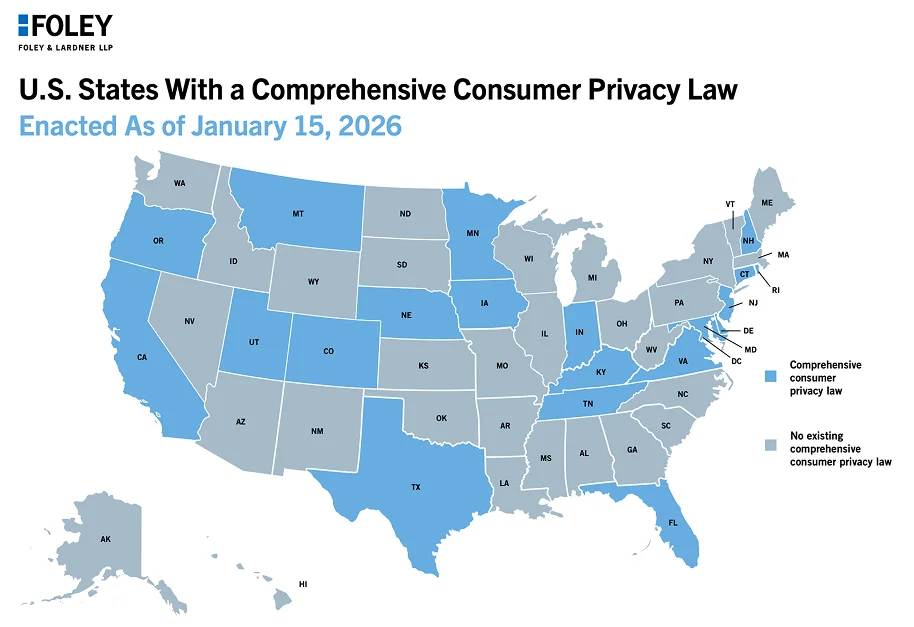
Pic. U.S. states with a comprehensive consumer privacy law (Source).
The cure period era is ending, and enforcement math changes
Cure periods were always a temporary bridge between new laws and real enforcement. That bridge is coming up fast.
The 60-day cure period under the Colorado Privacy Act sunset on January 1, 2025, so enforcement actions no longer have to pause while businesses remediate after the fact.
Then Oregonfollowed with a 30-day cure window that expires January 1, 2026; the Oregon DOJ has described the law as being in its cure period until that date.(Oregon Department of Justice)
And Rhode Islandshows the direction of travel: no cure period at all, with civil penalties that can reach up to $10,000 per violation.
For programmatic teams, “per violation” isn’t an abstract concept. At scale, it’s the difference between a contained issue and a compounding one, especially when data moves across multiple vendors and signals don’t propagate consistently. If the plan is to catch privacy problems after launch, what you have isn’t a model you can rely on; it’s a risk you’re accepting and hoping won’t compound.
{{Privacys-Hard-Landing-in-2026-1="/tables"}}
Universal opt-out is not a banner problem
The second shift is easy to underestimate because it sounds technical: universal opt-out signals.
Global Privacy Control (GPC) is a browser-level signal consumers can enable, and the California Department of Justice is clear that covered businesses must treat a user-enabled GPC as a valid request to opt out of sale or sharing.
Meanwhile, the Oregon Department of Justice has highlighted a “Universal Opt-Out” tool for residents as part of its public-facing privacy education.
Regulators are also coordinating. In 2025, a multi-state group announced investigative activity focused on whether businesses are honoring GPC signals—an early signal that “preference signals” are not an academic topic anymore.
Even with a clean CMP implementation, universal opt-out still fails if the downstream plumbing doesn’t carry the signal reliably, because honoring it on the site while losing it in vendor flows creates a gap between stated policy and actual behavior.
⚡ In a large-scale academic crawl, only 15% of sites with a California-relevant GPP sectionopted users out of “selling” via the GPP string after a Global Privacy Control signal in April 2024. That’s the hard part of universal opt-out in one number: the signal can be valid, present, and still fail to make it through the chain.
Treat universal opt-out like any other control that matters: implement it, test it, and keep testing it. Most failures happen through drift, not intent:
a new tag template ships without the right rule,
a partner changes its ingestion logic,
a measurement integration keeps collecting while activation stops,
reporting no longer matches reality.
If your team can’t detect those changes quickly and calmly, you’ll end up discovering them the hard way, at the exact moment you’d rather be focused on everything else.
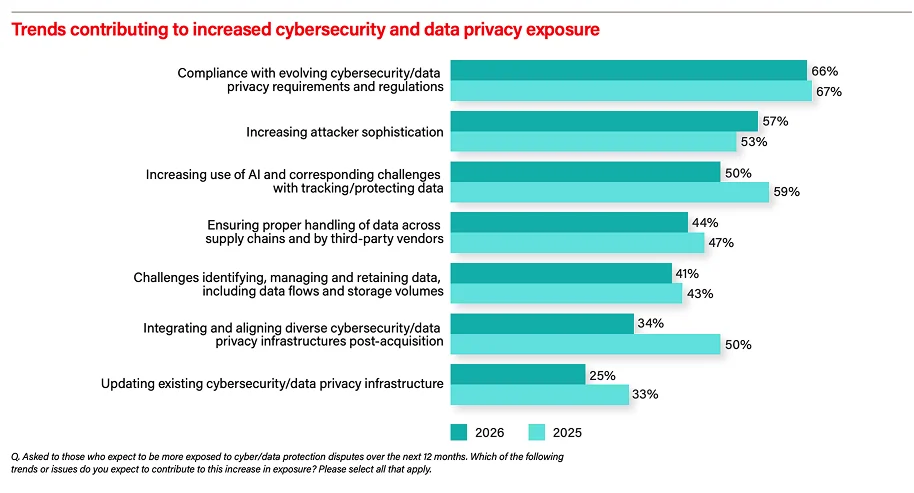
Pic. Trends contributing to increased cybersecurity and data privacy exposure (Source).
Sensitive data is expanding, and two categories hit media directly
State laws aren’t only multiplying. Definitions are evolving, and the list of “sensitive” categories is getting longer. Two areas are especially relevant for media teams.
Precise geolocation is turning from signal into liability
Oregon’s privacy law now bans the sale of “precise geolocation data,” defined as location accurate within a radius of 1,750 feet.
That threshold has practical consequences, because the kinds of high-precision signals it covers are exactly what power common tactics like conquesting, venue-based targeting, and some approaches to foot-traffic attribution. The point isn’t that location-based tactics disappear overnight. It’s that the consent, disclosure, and governance bar rises, especially for anything that looks like device-level precision without explicit, granular permission.
The moment you struggle to name the partners touching precise location, you’ve learned something important: the stack isn’t well-inventoried, and that’s the risk.
{{Privacys-Hard-Landing-in-2026-2="/tables"}}
Neural data is the headline, but the real story is scope creep
Connecticutis moving to classify “neural data” as sensitive, with updates tied to July 1, 2026.
Most marketing teams aren’t collecting anything that looks like brain-activity data, but the point isn’t that everyone suddenly will; it’s that state laws are expanding the sensitive-data perimeter in ways that follow new technologies and the inferences they enable. As targeting and measurement become more model-driven, the question starts to shift from “what did we collect?” to “what did we derive, predict, or infer from it?”, and a sensitive-data strategy that lives as a static list will struggle to keep up.
The youth shield changes audience design, not just disclosures
Youth privacy is often treated like a clause you add to a contract. In 2026, it behaves more like a constraint on audience design.
Oregon amendments, for example, include restrictions that prohibit profiling and targeted advertising to consumers under 16.
Maryland’s “knew or should have known” approach changes the burden of knowledge. It pushes agencies toward cautious-by-design planning, especially in content environments that could plausibly skew young.
The practical implication is uncomfortable but clear: “we didn’t intend to reach minors” is a harder argument to make when your supply choices make that outcome foreseeable. That’s why guardrails need to sit upstream—in planning and activation—rather than relying on legal review as the last line of defense.
Where privacy breaks first in real media execution
When privacy becomes operational, the failure points are usually mundane. They’re also predictable.
The “new partner” moment. A team adds a data provider, a measurement vendor, or a specialty SSP to solve a performance problem. Contracts get signed. Tags get implemented. But opt-out handling and data-sharing definitions don’t get translated into day-to-day execution. This is how “we thought it was covered” becomes “we can’t prove it.”
The “measurement gap.” Many teams turn off targeted activation correctly when opt-out is present, but measurement keeps running on a different set of rules. The result is a stack that behaves inconsistently across activation, attribution, and reporting—exactly where internal stakeholders expect consistency.
⚡ According to Adjust, the industry-wide ATT opt-in rate was 35% in Q2 2025 among users shown the prompt—so most iOS users are not available for app-level tracking by default. That’s why “we’ll fix attribution later” doesn’t hold up anymore: you need measurement designs that remain useful even when identity is missing.
The “template drift.” A global site template changes, or a new consent category is introduced, and suddenly a previously compliant configuration isn’t compliant anymore. Because nobody gets a Slack alert when that happens, it can persist for weeks.
If these sound familiar, it’s because they’re not edge cases. They’re the default modes of failure in complex systems.
What a privacy-first operating model looks like for media teams
A privacy-first operating model treats privacy like a supply chain discipline: map it, monitor it, and minimize the number of places the system can fail.
The controls that matter most in 2026 are straightforward:
Build a live map of data movement. You should be able to explain where data can flow across tags, pixels/SDKs, measurement partners, DSPs, SSPs, and any intermediaries.
⚡ A cookie behavior study found25.4% of users accept cookies, while 68.9% close or ignore the banner—meaning large chunks of visit-level data never become measurable in the first place. If your reporting assumes full-funnel observability, you’re likely evaluating outcomes on a partial dataset and calling it “performance.”
Make universal opt-out measurable. Implement GPC recognition, then test and monitor it. Drift is the enemy.
Re-qualify vendors by proof. Ask how opt-out states are handled, logged, and enforced; what gets shared downstream; and how “sale/share” is interpreted in practice. Vague answers are a risk signal.
Create a high-scrutiny bucket. If a tactic depends on precise location, youth-adjacent audiences, or sensitive inference, it belongs in a stricter workflow until consent and controls are provable.
{{Privacys-Hard-Landing-in-2026-3="/tables"}}
If you need a practical starting point, run a 30-day pressure test:
choose one major property and one major campaign type,
verify GPC handling through activation and measurement,
inventory every vendor receiving data in that flow,
and document what “sale/share” means in those integrations. You’ll learn more from that exercise than from another round of “policy alignment” meetings.
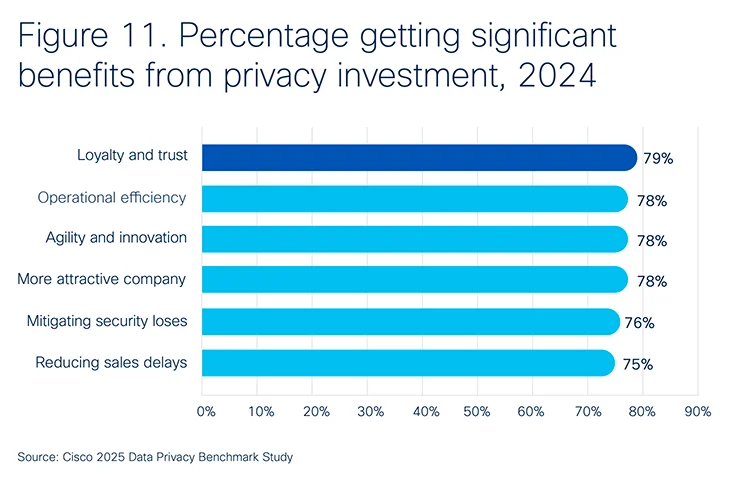
Pic. Percentage getting significant benefits from privacy investment, 2024 (Source)
Where transparency helps when state laws diverge
A growing patchwork of state laws means “compliance” is ongoing behavior across a stack. If you can’t see where budget ran, what intermediaries were involved, or how preference signals were honored, you can’t answer the questions that matter when scrutiny rises, and you can’t fix issues quickly when something drifts.
This is the narrow lane where AI Digital’s Open Garden belongs. Open Garden is a framework for operating outside black-box constraints so you can map how media decisions get made, what data is used, and where it flows—not just in theory, but in the day-to-day mechanics of planning, activation, and measurement. It’s less about finding a loophole in the ecosystem and more about building a version of buying where the “why” and “how” remain visible enough to govern.
Smart Supply is a practical expression of that same discipline on the supply side. It’s a bias toward fewer unnecessary hops, clearer accountability, and repeatable controls—qualifying inventory based on what can be validated (signal handling, disclosure, brand safety context, measurement behavior), and prioritizing placements you can explain to a legal team, a client, or a regulator without hand-waving.
The point is simple and structural: greater auditability in media buying reduces uncertainty, which is exactly what you need when the privacy rulebook is moving underneath you.
Closing: the 2026 checklist that actually matters
Privacy’s hard landing isn’t about a single regulation headline. It’s about closing the gap between what we say we do and what our systems actually do.
Audit where you’ve been relying on cure periods. Validate universal opt-out handling end to end. Reassess any tactic that depends on precise location or could plausibly touch youth audiences. Then put monitoring in place, so compliance isn’t a quarterly scramble.
2026 won’t reward the teams who sound the most prepared. It’ll reward the teams who can prove their stack behaves.
If anything in this article sparked questions (or you want a second set of eyes on your current approach), reach out to AI Digital. We’re happy to talk through how privacy laws apply to your media and measurement stack and help you build a practical path forward.
Blind spot
Key issues
Business impact
AI Digital solution
Lack of transparency in AI models
• Platforms own AI models and train on proprietary data • Brands have little visibility into decision-making • "Walled gardens" restrict data access
• Inefficient ad spend • Limited strategic control • Eroded consumer trust • Potential budget mismanagement
Open Garden framework providing: • Complete transparency • DSP-agnostic execution • Cross-platform data & insights
Optimizing ads vs. optimizing impact
• AI excels at short-term metrics but may struggle with brand building • Consumers can detect AI-generated content • Efficiency might come at cost of authenticity
• Short-term gains at expense of brand health • Potential loss of authentic connection • Reduced effectiveness in storytelling
Smart Supply offering: • Human oversight of AI recommendations • Custom KPI alignment beyond clicks • Brand-safe inventory verification
The illusion of personalization
• Segment optimization rebranded as personalization • First-party data infrastructure challenges • Personalization vs. surveillance concerns
• Potential mismatch between promise and reality • Privacy concerns affecting consumer trust • Cost barriers for smaller businesses
Elevate platform features: • Real-time AI + human intelligence • First-party data activation • Ethical personalization strategies
AI-Driven efficiency vs. decision-making
• AI shifting from tool to decision-maker • Black box optimization like Google Performance Max • Human oversight limitations
• Strategic control loss • Difficulty questioning AI outputs • Inability to measure granular impact • Potential brand damage from mistakes
Managed Service with: • Human strategists overseeing AI • Custom KPI optimization • Complete campaign transparency
Fig. 1. Summary of AI blind spots in advertising
Dimension
Walled garden advantage
Walled garden limitation
Strategic impact
Audience access
Massive, engaged user bases
Limited visibility beyond platform
Reach without understanding
Data control
Sophisticated targeting tools
Data remains siloed within platform
Fragmented customer view
Measurement
Detailed in-platform metrics
Inconsistent cross-platform standards
Difficult performance comparison
Intelligence
Platform-specific insights
Limited data portability
Restricted strategic learning
Optimization
Powerful automated tools
Black-box algorithms
Reduced marketer control
Fig. 2. Strategic trade-offs in walled garden advertising.
Core issue
Platform priority
Walled garden limitation
Real-world example
Attribution opacity
Claiming maximum credit for conversions
Limited visibility into true conversion paths
Meta and TikTok's conflicting attribution models after iOS privacy updates
Data restrictions
Maintaining proprietary data control
Inability to combine platform data with other sources
Amazon DSP's limitations on detailed performance data exports
Cross-channel blindspots
Keeping advertisers within ecosystem
Fragmented view of customer journey
YouTube/DV360 campaigns lacking integration with non-Google platforms
Black box algorithms
Optimizing for platform revenue
Reduced control over campaign execution
Self-serve platforms using opaque ML models with little advertiser input
Performance reporting
Presenting platform in best light
Discrepancies between platform-reported and independently measured results
Consistently higher performance metrics in platform reports vs. third-party measurement
Fig. 1. The Walled garden misalignment: Platform interests vs. advertiser needs.
Key dimension
Challenge
Strategic imperative
ROAS volatility
Softer returns across digital channels
Shift from soft KPIs to measurable revenue impact
Media planning
Static plans no longer effective
Develop agile, modular approaches adaptable to changing conditions
Brand/performance
Traditional division dissolving
Create full-funnel strategies balancing long-term equity with short-term conversion
Capability
Key features
Benefits
Performance data
Elevate forecasting tool
• Vertical-specific insights • Historical data from past economic turbulence • "Cascade planning" functionality • Real-time adaptation
• Provides agility to adjust campaign strategy based on performance • Shows which media channels work best to drive efficient and effective performance • Confident budget reallocation • Reduces reaction time to market shifts
• Dataset from 10,000+ campaigns • Cuts response time from weeks to minutes
• Reaches people most likely to buy • Avoids wasted impressions and budgets on poor-performing placements • Context-aligned messaging
• 25+ billion bid requests analyzed daily • 18% improvement in working media efficiency • 26% increase in engagement during recessions
Full-funnel accountability
• Links awareness campaigns to lower funnel outcomes • Tests if ads actually drive new business • Measures brand perception changes • "Ask Elevate" AI Chat Assistant
• Upper-funnel to outcome connection • Sentiment shift tracking • Personalized messaging • Helps balance immediate sales vs. long-term brand building
• Natural language data queries • True business impact measurement
Open Garden approach
• Cross-platform and channel planning • Not locked into specific platforms • Unified cross-platform reach • Shows exactly where money is spent
• Reduces complexity across channels • Performance-based ad placement • Rapid budget reallocation • Eliminates platform-specific commitments and provides platform-based optimization and agility
• Coverage across all inventory sources • Provides full visibility into spending • Avoids the inability to pivot across platform as you’re not in a singular platform
Fig. 1. How AI Digital helps during economic uncertainty.
Trend
What it means for marketers
Supply & demand lines are blurring
Platforms from Google (P-Max) to Microsoft are merging optimization and inventory in one opaque box. Expect more bundled “best available” media where the algorithm, not the trader, decides channel and publisher mix.
Walled gardens get taller
Microsoft’s O&O set now spans Bing, Xbox, Outlook, Edge and LinkedIn, which just launched revenue-sharing video programs to lure creators and ad dollars. (Business Insider)
Retail & commerce media shape strategy
Microsoft’s Curate lets retailers and data owners package first-party segments, an echo of Amazon’s and Walmart’s approaches. Agencies must master seller-defined audiences as well as buyer-side tactics.
AI oversight becomes critical
Closed AI bidding means fewer levers for traders. Independent verification, incrementality testing and commercial guardrails rise in importance.
Fig. 1. Platform trends and their implications.
Metric
Connected TV (CTV)
Linear TV
Video Completion Rate
94.5%
70%
Purchase Rate After Ad
23%
12%
Ad Attention Rate
57% (prefer CTV ads)
54.5%
Viewer Reach (U.S.)
85% of households
228 million viewers
Retail Media Trends 2025
Access Complete consumer behaviour analyses and competitor benchmarks.
Identify and categorize audience groups based on behaviors, preferences, and characteristics
Michaels Stores: Implemented a genAI platform that increased email personalization from 20% to 95%, leading to a 41% boost in SMS click through rates and a 25% increase in engagement.
Estée Lauder: Partnered with Google Cloud to leverage genAI technologies for real-time consumer feedback monitoring and analyzing consumer sentiment across various channels.
High
Medium
Automated ad campaigns
Automate ad creation, placement, and optimization across various platforms
Showmax: Partnered with AI firms toautomate ad creation and testing, reducing production time by 70% while streamlining their quality assurance process.
Headway: Employed AI tools for ad creation and optimization, boosting performance by 40% and reaching 3.3 billion impressions while incorporating AI-generated content in 20% of their paid campaigns.
High
High
Brand sentiment tracking
Monitor and analyze public opinion about a brand across multiple channels in real time
L’Oréal: Analyzed millions of online comments, images, and videos to identify potential product innovation opportunities, effectively tracking brand sentiment and consumer trends.
Kellogg Company: Used AI to scan trending recipes featuring cereal, leveraging this data to launch targeted social campaigns that capitalize on positive brand sentiment and culinary trends.
High
Low
Campaign strategy optimization
Analyze data to predict optimal campaign approaches, channels, and timing
DoorDash: Leveraged Google’s AI-powered Demand Gen tool, which boosted its conversion rate by 15 times and improved cost per action efficiency by 50% compared with previous campaigns.
Kitsch: Employed Meta’s Advantage+ shopping campaigns with AI-powered tools to optimize campaigns, identifying and delivering top-performing ads to high-value consumers.
High
High
Content strategy
Generate content ideas, predict performance, and optimize distribution strategies
JPMorgan Chase: Collaborated with Persado to develop LLMs for marketing copy, achieving up to 450% higher clickthrough rates compared with human-written ads in pilot tests.
Hotel Chocolat: Employed genAI for concept development and production of its Velvetiser TV ad, which earned the highest-ever System1 score for adomestic appliance commercial.
High
High
Personalization strategy development
Create tailored messaging and experiences for consumers at scale
Stitch Fix: Uses genAI to help stylists interpret customer feedback and provide product recommendations, effectively personalizing shopping experiences.
Instacart: Uses genAI to offer customers personalized recipes, mealplanning ideas, and shopping lists based on individual preferences and habits.
Medium
Medium
Share article
Url copied to clipboard
No items found.
Subscribe to our Newsletter
THANK YOU FOR YOUR SUBSCRIPTION
Oops! Something went wrong while submitting the form.
Questions? We have answers
Have other questions?
If you have more questions, contact us so we can help.
Questions? We have answers
This is some text inside of a div block.
Lorem ipsum dolor sit amet, consectetur adipiscing elit. Suspendisse varius enim in eros elementum tristique. Duis cursus, mi quis viverra ornare, eros dolor interdum nulla, ut commodo diam libero vitae erat. Aenean faucibus nibh et justo cursus id rutrum lorem imperdiet. Nunc ut sem vitae risus tristique posuere.
This is some text inside of a div block.
Lorem ipsum dolor sit amet, consectetur adipiscing elit. Suspendisse varius enim in eros elementum tristique. Duis cursus, mi quis viverra ornare, eros dolor interdum nulla, ut commodo diam libero vitae erat. Aenean faucibus nibh et justo cursus id rutrum lorem imperdiet. Nunc ut sem vitae risus tristique posuere.
This is some text inside of a div block.
Lorem ipsum dolor sit amet, consectetur adipiscing elit. Suspendisse varius enim in eros elementum tristique. Duis cursus, mi quis viverra ornare, eros dolor interdum nulla, ut commodo diam libero vitae erat. Aenean faucibus nibh et justo cursus id rutrum lorem imperdiet. Nunc ut sem vitae risus tristique posuere.
This is some text inside of a div block.
Lorem ipsum dolor sit amet, consectetur adipiscing elit. Suspendisse varius enim in eros elementum tristique. Duis cursus, mi quis viverra ornare, eros dolor interdum nulla, ut commodo diam libero vitae erat. Aenean faucibus nibh et justo cursus id rutrum lorem imperdiet. Nunc ut sem vitae risus tristique posuere.
This is some text inside of a div block.
Lorem ipsum dolor sit amet, consectetur adipiscing elit. Suspendisse varius enim in eros elementum tristique. Duis cursus, mi quis viverra ornare, eros dolor interdum nulla, ut commodo diam libero vitae erat. Aenean faucibus nibh et justo cursus id rutrum lorem imperdiet. Nunc ut sem vitae risus tristique posuere.
This is some text inside of a div block.
Lorem ipsum dolor sit amet, consectetur adipiscing elit. Suspendisse varius enim in eros elementum tristique. Duis cursus, mi quis viverra ornare, eros dolor interdum nulla, ut commodo diam libero vitae erat. Aenean faucibus nibh et justo cursus id rutrum lorem imperdiet. Nunc ut sem vitae risus tristique posuere.
This is some text inside of a div block.
Lorem ipsum dolor sit amet, consectetur adipiscing elit. Suspendisse varius enim in eros elementum tristique. Duis cursus, mi quis viverra ornare, eros dolor interdum nulla, ut commodo diam libero vitae erat. Aenean faucibus nibh et justo cursus id rutrum lorem imperdiet. Nunc ut sem vitae risus tristique posuere.
.svg)
.svg)